This is a team of 40 AI agents that runs an entire law firm. Eight departments. Forty modules. One owner. It is not a single legal chatbot bolted onto a case management tool. It's a coordinated system that watches incoming leads and case schedules all day. The second a prospect reaches out, it flags the lead, drafts the follow-up, and builds the file. Nobody processed the lead by hand. It's already sitting in the queue, ready to book. Below is how it works, written for two audiences at once: the attorney who wants to know what it does, and the engineering team that needs to know how it's built.
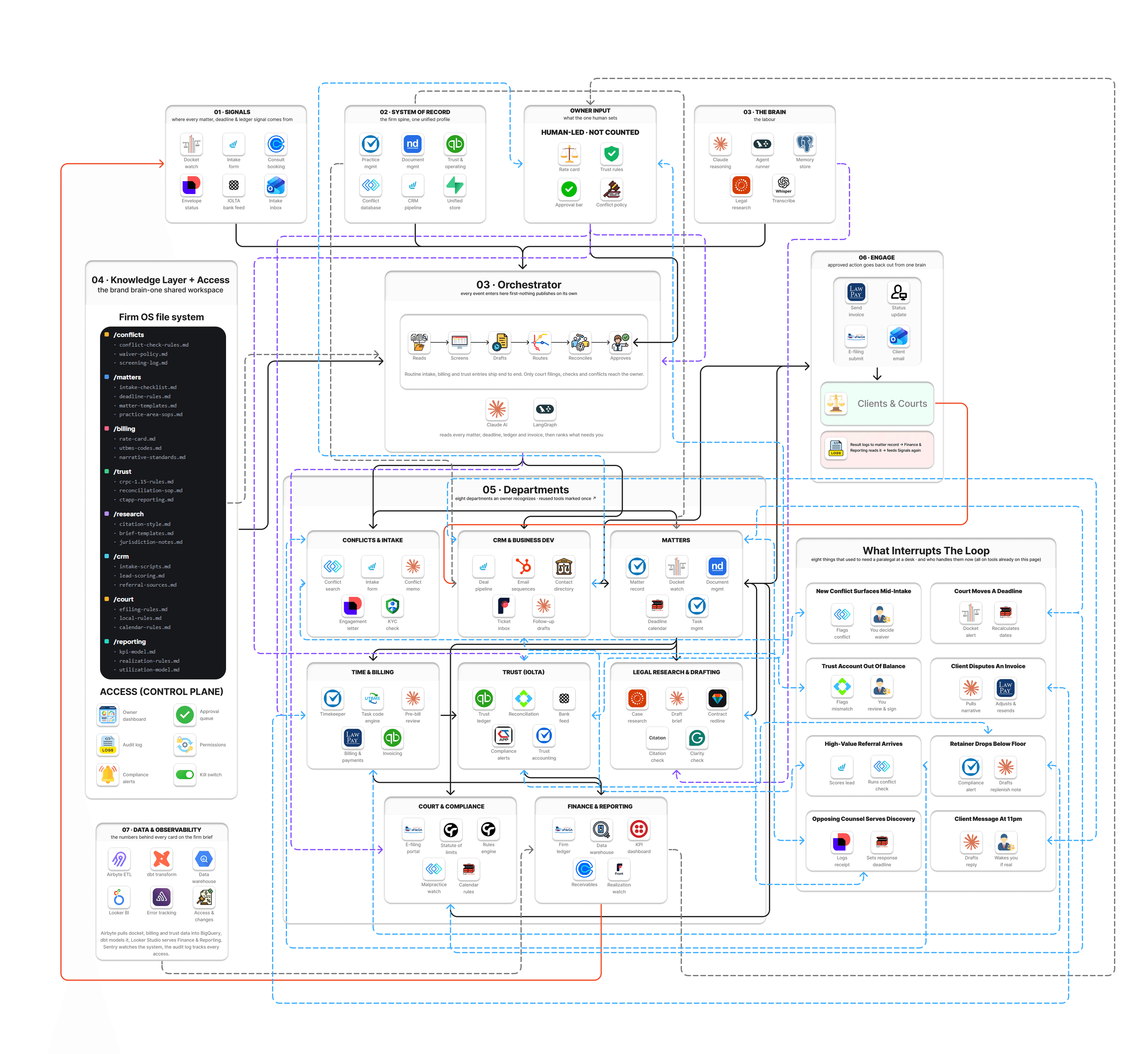
Module 1: CRM and Business Development
What it does: a prospect messages in. The system asks what they need, pulls their contact information, and logs it. Front holds the ticket, HubSpot opens the file and books the consult, and Claude drafts what to ask first. It sends the whole thing up for approval. The second the attorney approves, it's ready: client name, what they need, and where to start the call. And it cannot book a client the firm would conflict out on. If the name matches the conflict list, it doesn't send.
How it's built: the CRM and Business Dev department runs a deal pipeline, email sequences, a contact directory, a ticket inbox through Front, and follow-up drafts, with intake, KYC, and conflict search feeding it. The conflict rule is enforced against the firm's own /conflicts files before anything reaches the approval queue, which is what keeps a routine intake from becoming an ethics problem.
Module 2: Matters
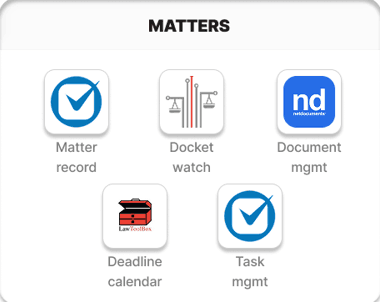
What it does: it watches the case files so a paralegal doesn't have to. A new document drops in NetDocuments, a deadline shifts on the calendar, a task needs assigning. It catches it, updates the docket, and reshapes the calendar to keep the matter on track, the same day, not after the deadline. That is a case manager watching the records 24/7, except it never blinks.
How it's built: the Matters department pairs the matter record with docket watch, document management in NetDocuments, a deadline calendar, and task management. Deadline rules and matter templates are read from the /matters and /court files, so date calculations follow the firm's own jurisdiction rules rather than a generic default.
Module 3: Time and Billing
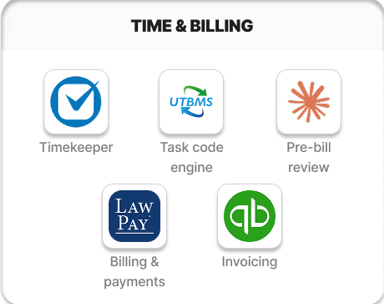
What it does: it catches the other side. A task wraps, a call ends, a meeting closes out. It pulls the time entries, matches the UTBMS task code, and drafts the pre-bill review before morning. Not a pile of timesheets. A ready invoice.
How it's built: the Time and Billing department runs a timekeeper, a task-code engine, pre-bill review, billing and payments through LawPay, and invoicing. Narrative standards and UTBMS codes come from the /billing files, so entries are coded and worded consistently before they ever reach a client bill.
The Orchestrator: nothing goes out on its own
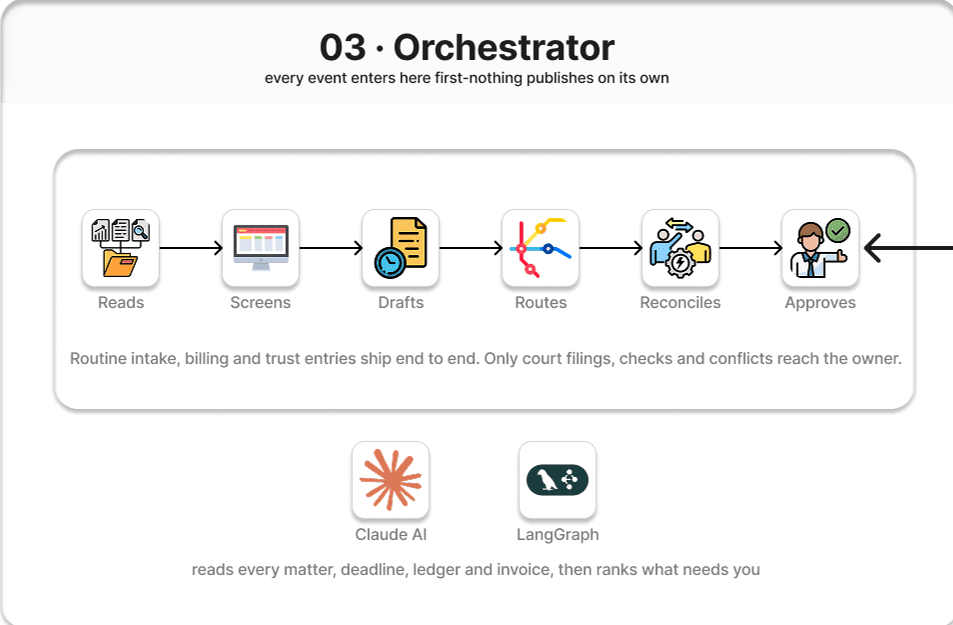
Sitting on top is one Orchestrator. Every event goes through it first. It checks the conflict list, checks the deadlines, and checks the billing codes. If something is off, it stops and calls the owner. It doesn't do the work itself. It decides who does.
How it's built: the Orchestrator pipeline is Reads, Screens, Drafts, Routes, Reconciles, Approves, reasoning against the playbook with Claude and remembering with pgvector. Routine intake, billing, and trust entries ship end to end. Only court filings, checks, and conflicts reach the owner. The Firm OS shared brain holds the rules a human authors once (conflict-check-rules, deadline-rules, rate-card, trust reconciliation SOP, citation-style, and more), while the matter record and ledgers stay live. The control plane gives the owner a dashboard, an approval queue, an audit log, permissions, compliance alerts, and a kill switch.
What used to need a paralegal at a desk
The clearest picture of the value is the interrupt list, the moments that used to require a person and are now handled automatically: a new conflict surfaces mid-intake and it flags the conflict for the attorney to decide the waiver; a court moves a deadline and it recalculates the dates; a trust account goes out of balance and it flags the mismatch for review and sign-off; a client disputes an invoice and it pulls the narrative and adjusts; a high-value referral arrives and it scores the lead and runs the conflict check; a retainer drops below the floor and it drafts the replenishment note; opposing counsel serves discovery and it logs the receipt and sets the response deadline; a client messages at 11pm and it drafts the reply, waking a human only if it's real.
Why this matters for a firm
The owner still owns the conflicts, the case deadlines, and anything that goes out under their name. Everything else runs. That is the real shift, and it's an architecture decision, not another piece of software: separate the work that scales infinitely (intake, docketing, time capture, billing, follow-up) from the judgment calls a licensed attorney must always own. Get that boundary right, and a small firm runs like a much larger one, with a full audit trail, hard conflict and trust checks, and a human gate on everything that carries professional risk.