One instruction was given to a system of 67 AI agents: go find customers. No list handed over. No manual outreach. By day 7, meetings were landing on the calendar that no human had booked. Here is exactly how the week went, explained for two audiences at once: the business owner who wants to know what it does, and the engineering team who needs to know how it's built.
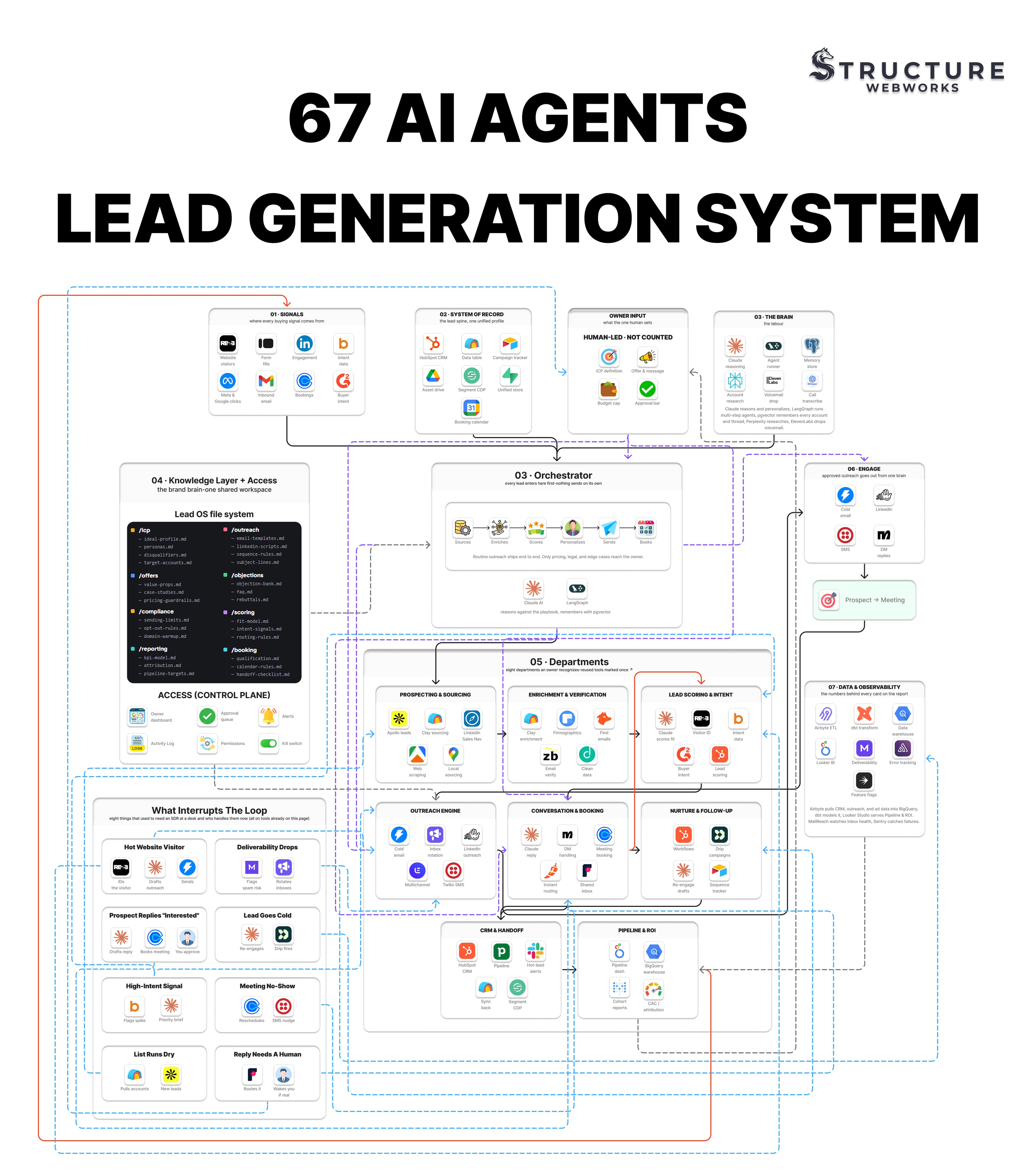
The setup: eight departments, twenty modules, one brain
This is not a single AI tool doing cold email. It's a coordinated system of 67 specialized agents organized into eight departments and twenty modules, all kept in sync by one shared brain. New leads get contacted before the owner wakes up, even the ones that came in at 2am. Emails get verified the moment they're found, so no send is wasted on a dead address. Meetings get booked in real time, often before anyone has read the reply.
For the dev team: the "brain" is a LangGraph orchestrator running on Claude for reasoning and personalization, with pgvector holding memory of every account and thread so context survives across the whole week. Perplexity handles account research and ElevenLabs drops voicemail. Every module reads from and writes to a shared Lead OS file system, which is why 67 agents stay coherent instead of contradicting each other.
Days 1 and 2: the list gets built from scratch
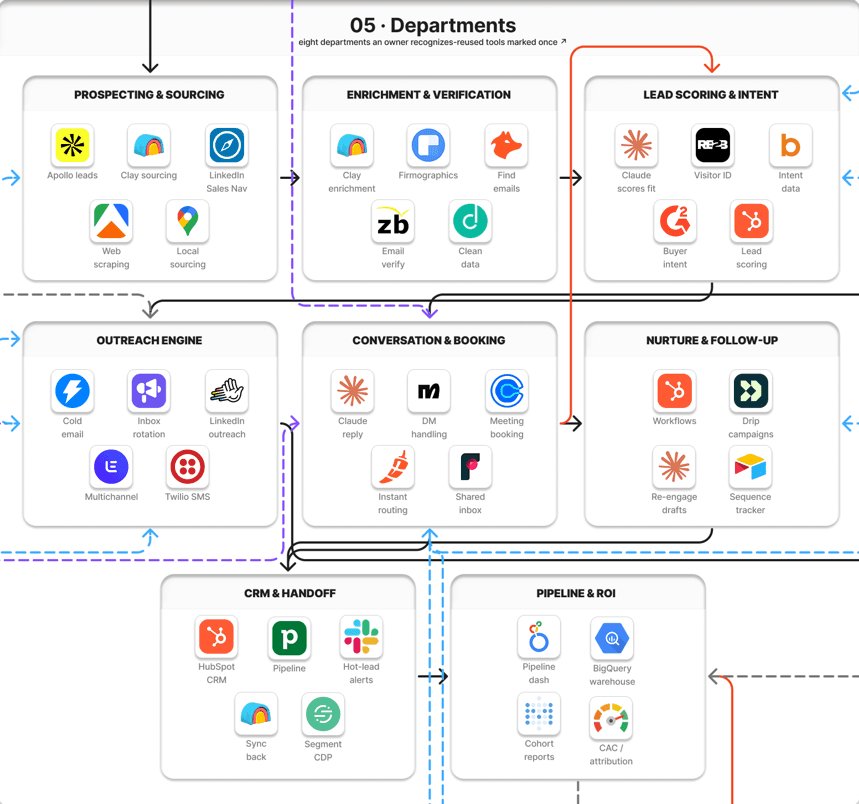
While the owner slept, the system pulled every company matching the ICP, filled in the real emails, and threw out the dead ones. Nothing was handed over. The agents built their own list, and it was clean.
How it's built: the Prospecting department uses Apollo, Clay, LinkedIn Sales Navigator, and web scraping to source accounts against the ICP definition in the Lead OS. The Enrichment and Verification department then runs Clay enrichment, firmographics, and email verification (ZeroBounce style) so every record is real before it ever enters outreach. Garbage never reaches the send step.
Days 3 and 4: leads get scored, then pursued
The system ranked every lead by who was actually ready to buy, dropped the weak ones, and started reaching out. Every message was personalized and sent in the brand voice. If it doesn't sound like the brand, it doesn't go out.
How it's built: the Lead Scoring and Intent department combines a fit model, buyer-intent signals, and routing rules to prioritize. The Outreach Engine then runs cold email, LinkedIn, and multichannel sequences through Twilio and inbox rotation, with deliverability watched by MailReach. Personalization is generated by Claude against the voice and offer files in the Lead OS, and the draft is validated against those rules before it can send.
Days 5 and 6: the meetings start booking themselves
A prospect replied "interested" at 11pm, and a response was already written in the brand voice with a booking link, waiting on a yes. The leads going cold got chased too. No meeting was booked by hand.
How it's built: the Conversation and Booking department drafts replies with Claude, handles DMs, and books meetings automatically. The Nurture and Follow-Up department runs workflows, drip campaigns, and re-engagement drafts so nothing slips. Reply-sensitive moments still land in an approval queue rather than sending blind.
Day 7: the thing running the whole floor
Sitting on top of all of it is an Orchestrator. Every lead passes through it first. It checks the fit, checks the limits, and decides what happens next. If something needs a real human, it stops and leaves it for the owner. It doesn't do the work itself. It runs the room.
How it's built: this is the control plane. An owner dashboard, an approval queue, an activity log, a permissions model, alerts, and a kill switch. The pipeline is Sources, Enriches, Scores, Personalizes, Sends, Books, and the approval gate is a hard rule, not a suggestion. Routine outreach ships end to end. Only pricing, legal, and edge cases reach the owner.
What used to need an SDR at a desk
The clearest picture of the value is the interrupt list, the moments that used to require a person and are now handled automatically:
A hot website visitor gets identified and drafted into outreach. Deliverability drops trigger a spam-risk flag and inbox rotation. A prospect replies "interested" and the reply plus booking link is ready for approval. A lead goes cold and the system re-engages it. A high-intent signal fires a priority brief. A meeting no-show gets a reschedule and an SMS nudge. The list runs dry and the system pulls new accounts on its own. When a reply genuinely needs a human, it routes it and wakes the owner only if it's real.
Why this matters for B2B
The owner still owns the offer, the budget, and anything that sounds like a promise. Everything else ran for a full week unattended, and it's still running. That's the real lesson, and it's an architecture decision, not a tool purchase: separate the work that scales infinitely (sourcing, enrichment, scoring, outreach, follow-up) from the small set of judgment calls a human should always own. Get that boundary right, and one founder runs the output of an entire sales development team, with a full audit trail and a kill switch instead of a leap of faith.