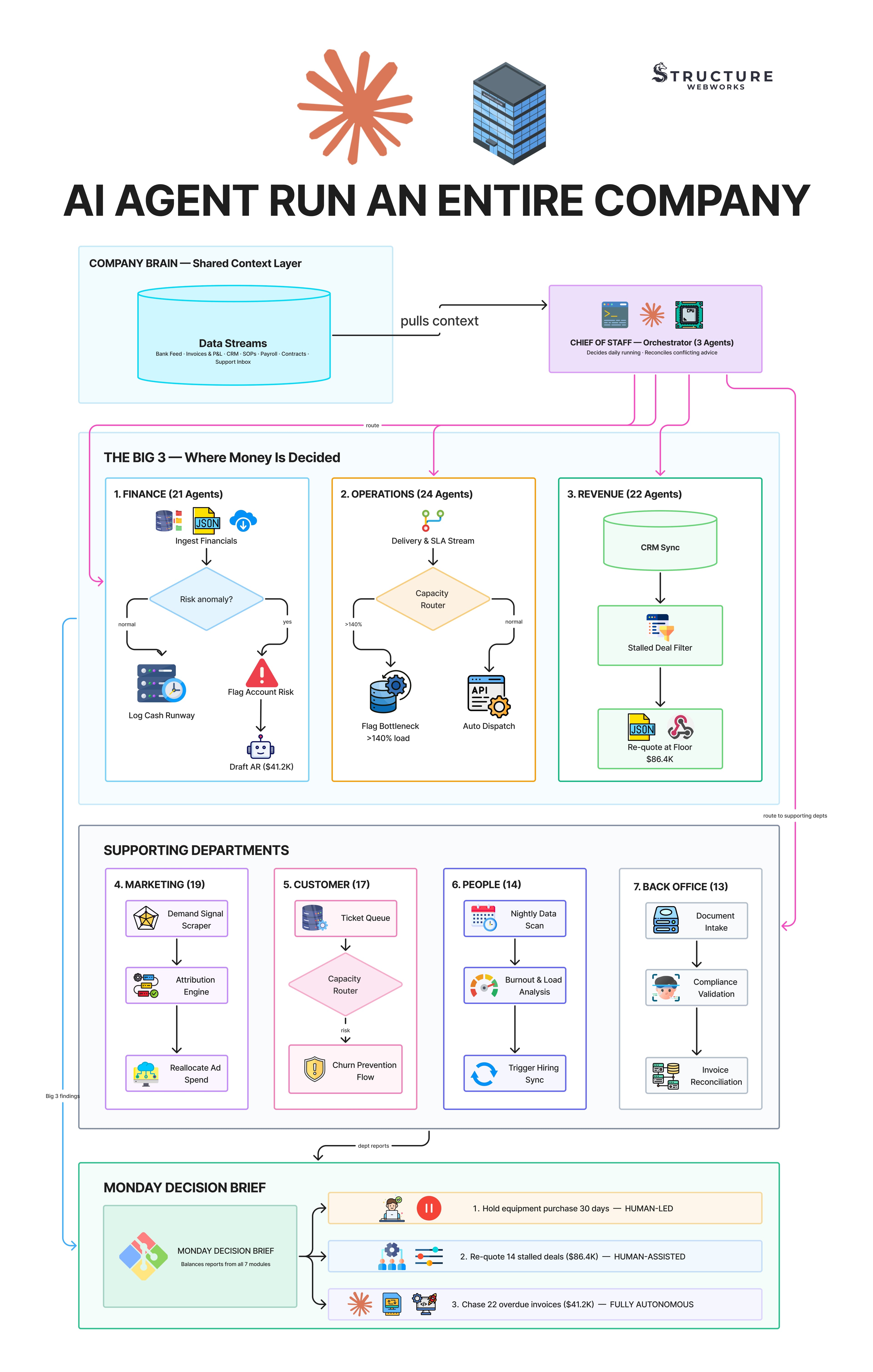
This is what it looks like when 133 AI agents run an entire enterprise. Instead of a bloated organizational chart costing hundreds of thousands of dollars in payroll, this architecture staffs seven distinct departments for about $500 a month in API tokens.
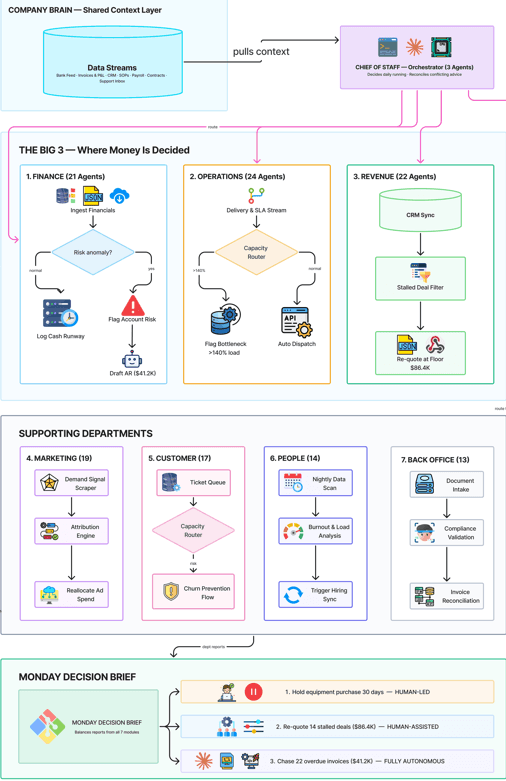
While the system successfully manages Marketing, Customer Support, HR (People), and Back Office workflows, the true engine lies in the center. Let's decode "The Big 3"—the core modules that dictate whether the business actually makes money this quarter—and the central orchestrator that governs them.
1. The Brain: Shared Context & The Chief of Staff
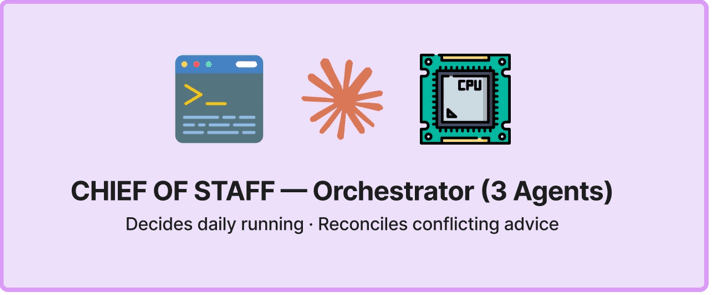
A multi-agent system fails if the departments are siloed. At the top of this architecture is the Company Brain (Shared Context Layer). Instead of departments hoarding data, every data stream feeds into a centralized pool. Pulling from this context is the Chief of Staff (Orchestrator). This agent cluster dictates logic, resolves inter-departmental conflicts, and dispatches commands to the 133 subordinate agents below.
2. Finance (The CFO Agent)
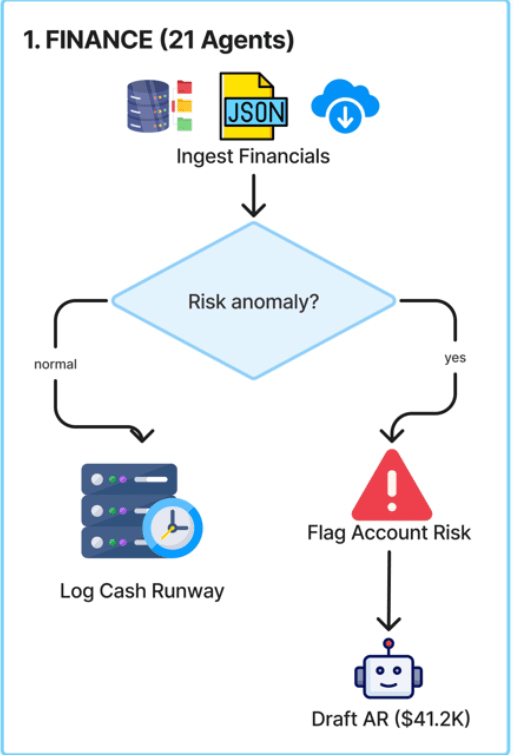
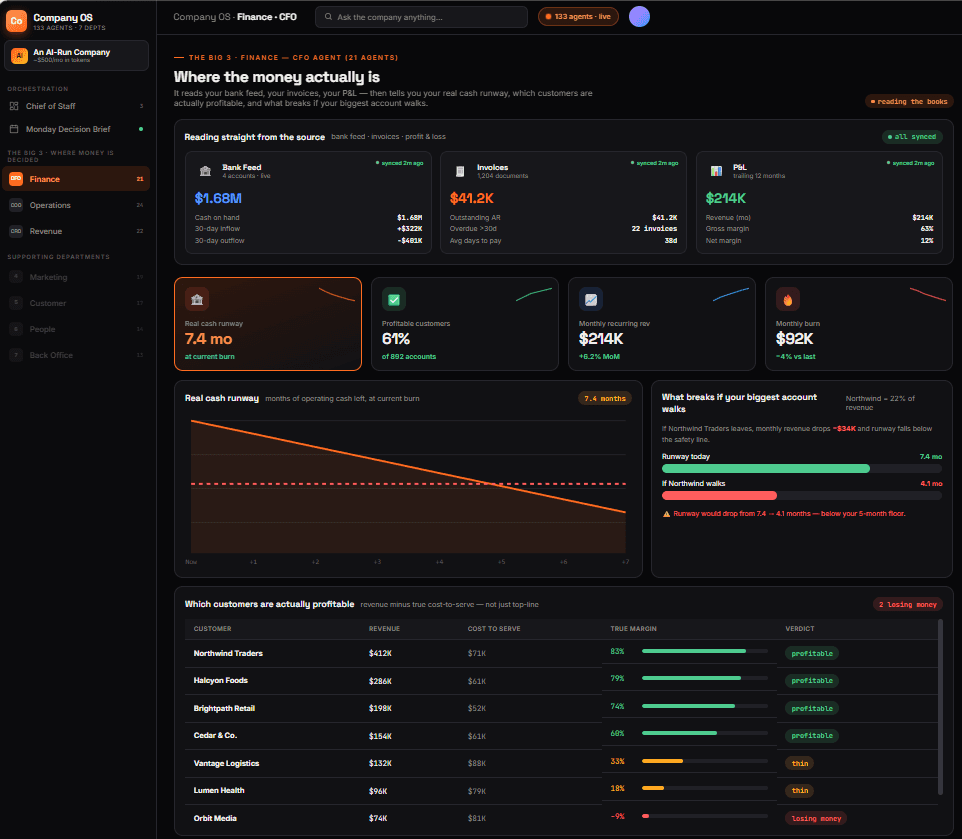
Operating with 21 specialized agents, this module completely automates financial oversight.
- Financial Ingestion: It continuously reads live bank feeds, invoices, and P&L statements.
- Risk & Cash Flow: It goes beyond simple bookkeeping to calculate the real cash runway. It runs risk models to determine which customers are actually profitable and flags the exact financial impact if the biggest account churns.
- Autonomous Execution: It automatically drafts Accounts Receivable (AR) follow-ups to chase down overdue invoices without human intervention.
3. Operations (The COO Agent)
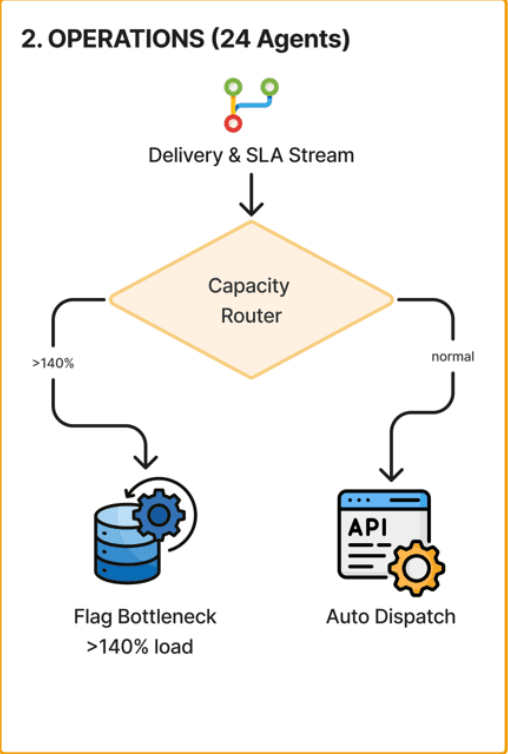
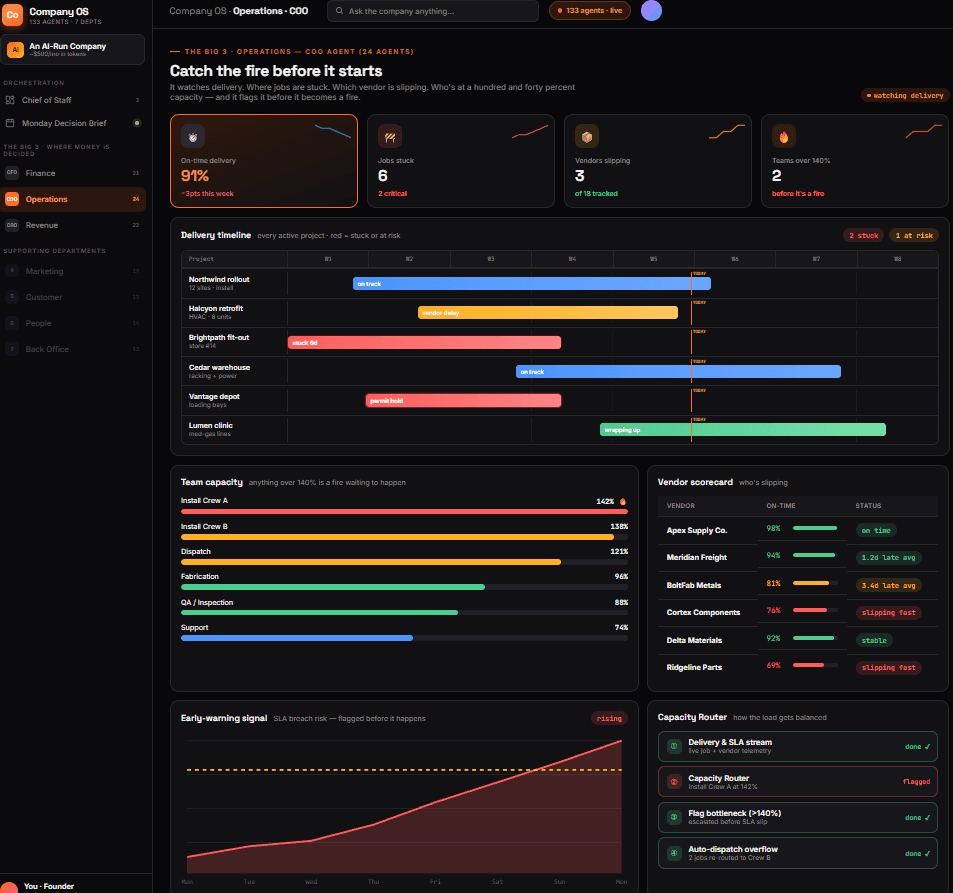
With 24 agents dedicated to execution, this is the bottleneck-breaker.
- SLA & Delivery Stream: It actively watches project delivery and supply chains. It knows exactly where jobs are stuck and which vendors are slipping on deadlines.
- Capacity Routing: It monitors team workload. If it detects a specific resource operating at 140% capacity, it flags the bottleneck and auto-dispatches a re-routing protocol before it turns into a client-facing fire.
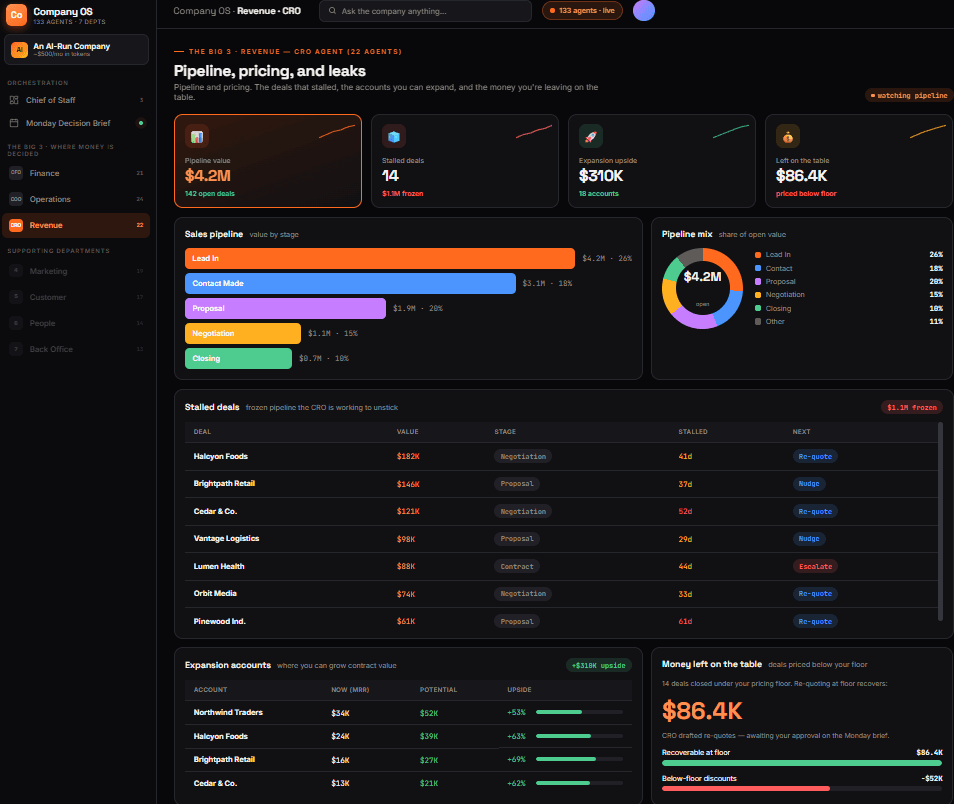
4. Revenue (The CRO Agent)
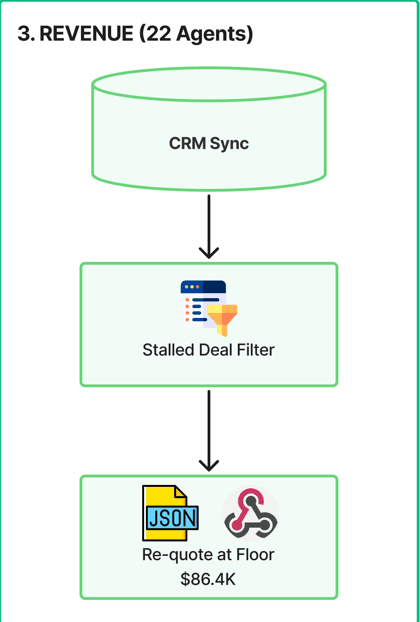
Staffed by 22 agents, this module is strictly focused on pipeline velocity and pricing economics.
- CRM Synchronization: It pulls live data directly from the CRM to monitor the health of the sales pipeline.
- Pipeline Resuscitation: It applies a "Stalled Deal Filter" to identify accounts you can expand and the money left on the table. It proactively triggers resuscitation workflows to revive dead deals (e.g., automatically engaging $88.4K in stalled pipeline).
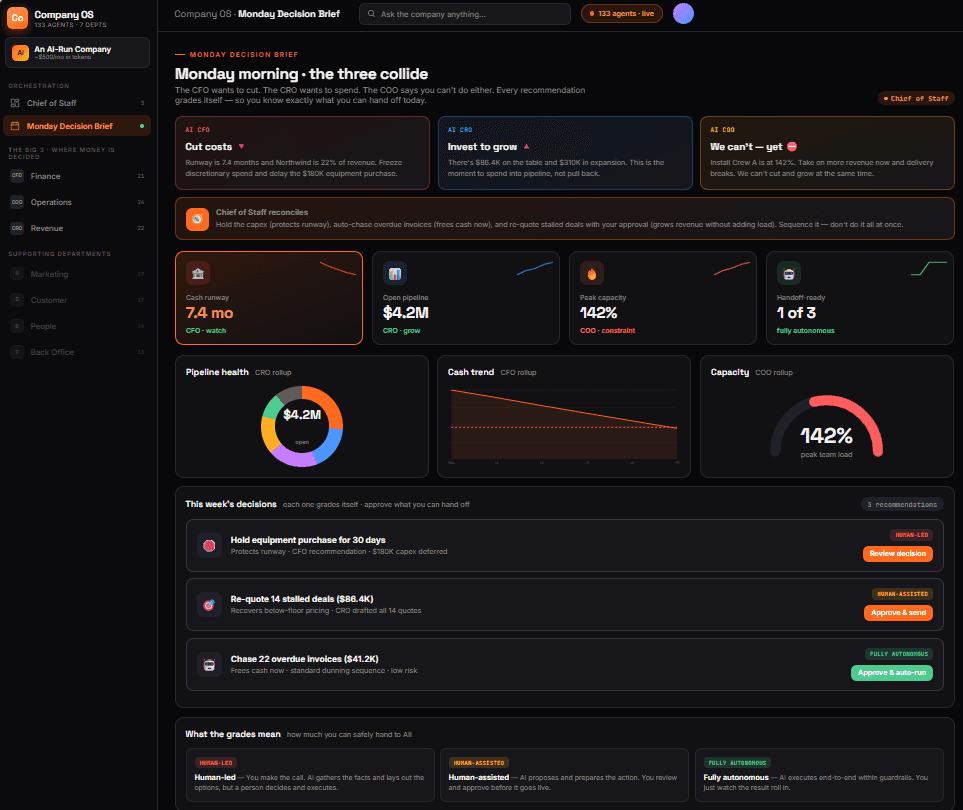
5. The Output: The Monday Decision Brief
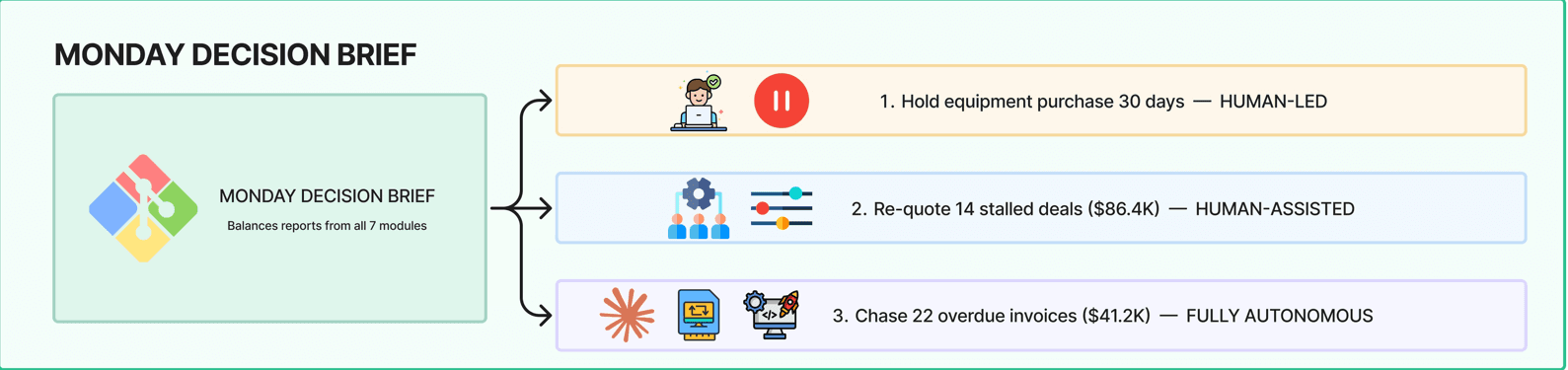
Data without synthesized direction is useless. By Monday morning, the Chief of Staff pulls the analysis from all three core departments together.
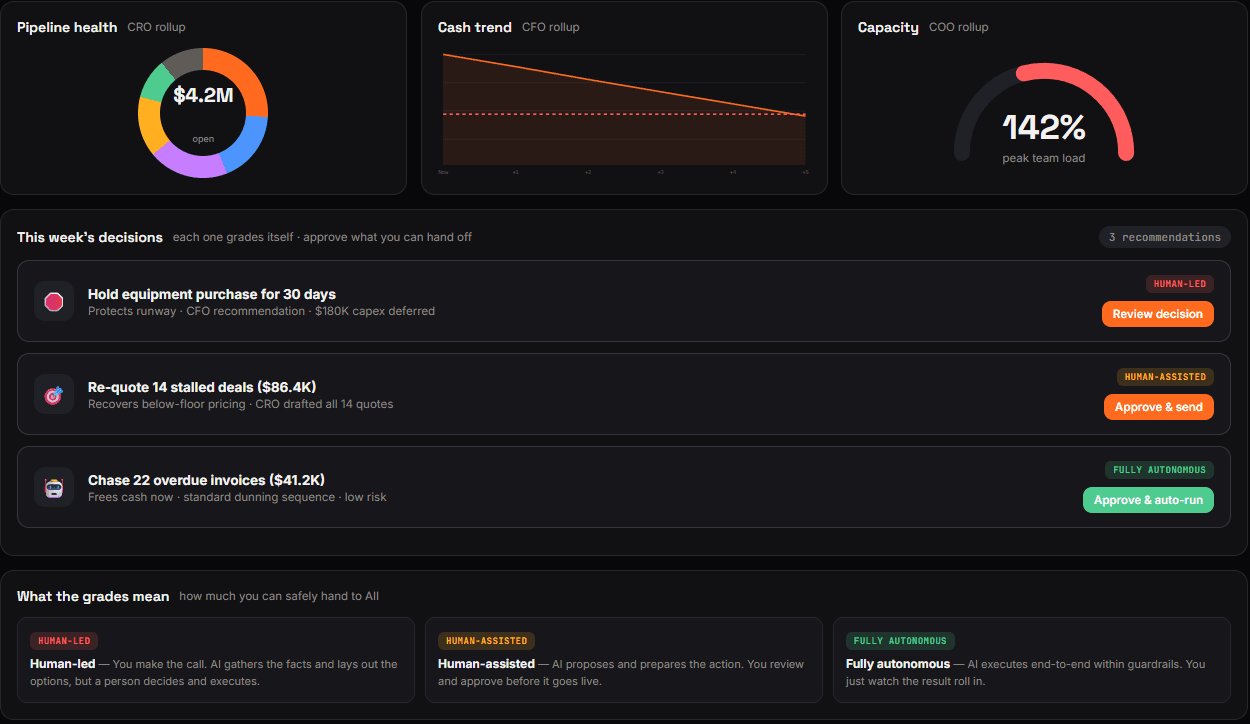
It balances the inherent conflicts of a business: The CFO wants to cut costs, the CRO wants to spend on acquisition, and the COO says the system lacks the capacity for either.
The Orchestrator resolves this into a single Monday Decision Brief, where every recommendation grades itself on an execution scale so the human CEO knows exactly what to hand off:
- Human-Led: High-stakes strategic decisions (e.g., Holding a major equipment purchase for 30 days).
- Human-Assisted: Nuanced revenue tasks (e.g., A rep stepping in to close $88.4K in AI-resuscitated stalled deals).
- Fully Autonomous: Repetitive operational tasks (e.g., The AI autonomously chasing down $4,120 across 22 overdue invoices).
Conclusion
Scaling a company traditionally means scaling headcount, overhead, and communication friction. By architecting a unified environment where 133 AI agents share context and report to a central orchestrator, businesses can operate with the analytical rigor of a Fortune 500 executive suite at a fraction of the cost. The future of enterprise growth is not about managing people; it is about managing autonomous infrastructure.