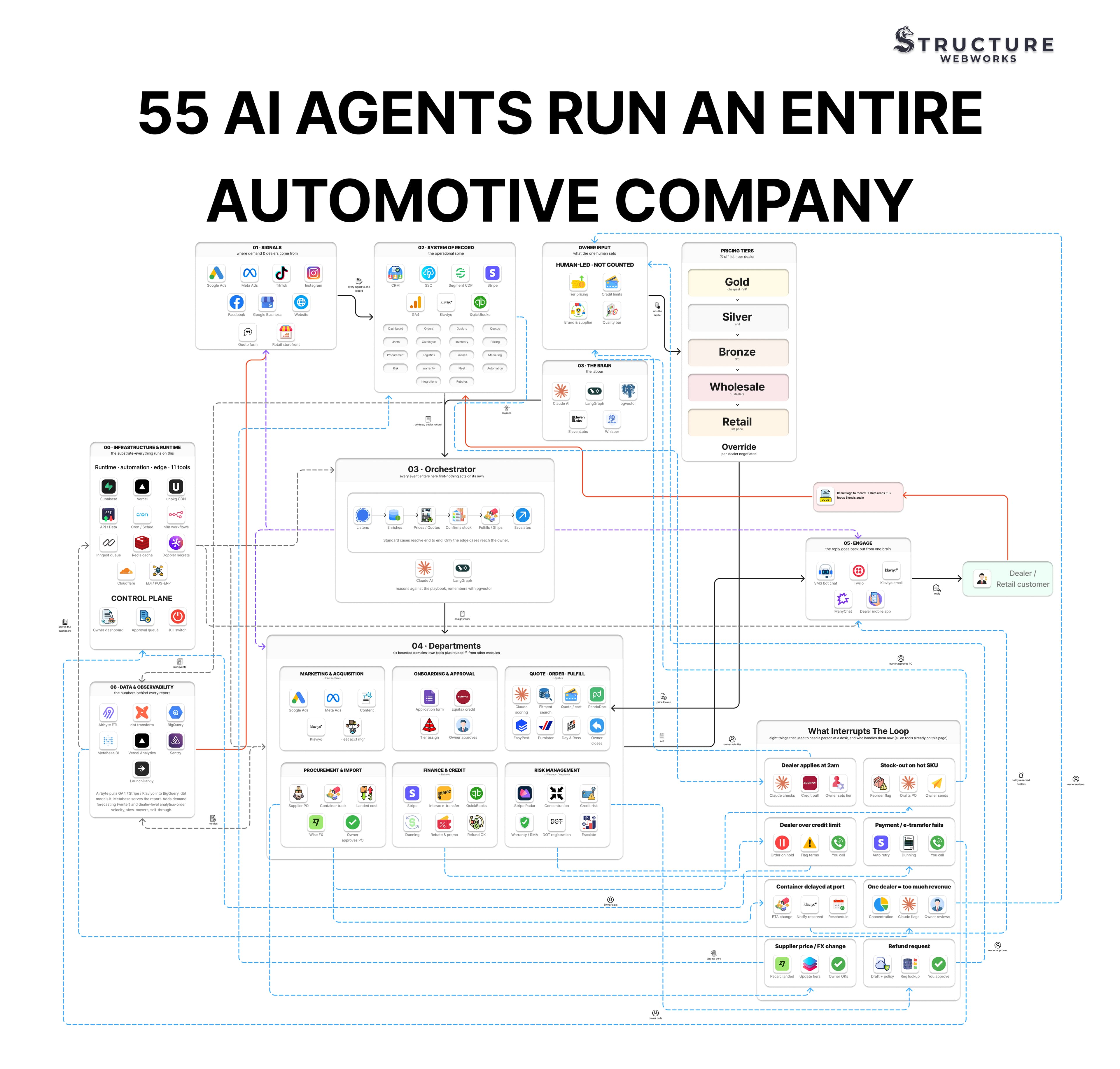
Imagine a wholesale automotive distribution company where dealer applications are approved at 2:00 AM on a Sunday, prices are instantly recalculated the moment a supplier changes their rates, and stock levels are monitored in real-time before a critical size runs out on you.
This is not a future concept; it is the reality of deploying a 55-agent AI operating system.
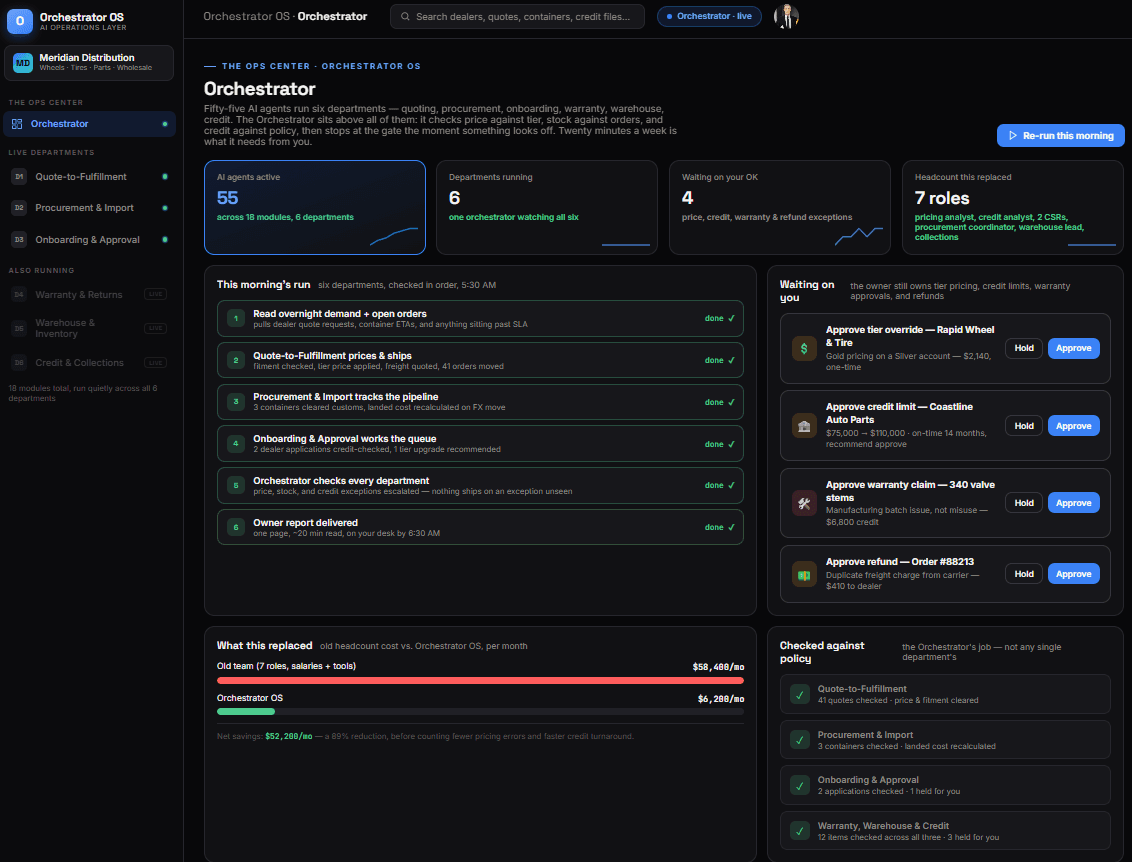
This architecture spans six departments and eighteen modules, all synchronized by a single central brain and governed by one human owner. Let's break down the core modules that replace manual reporting with real-time, autonomous execution.
1. Module 1: Quote-to-Fulfillment (The Execution Engine)
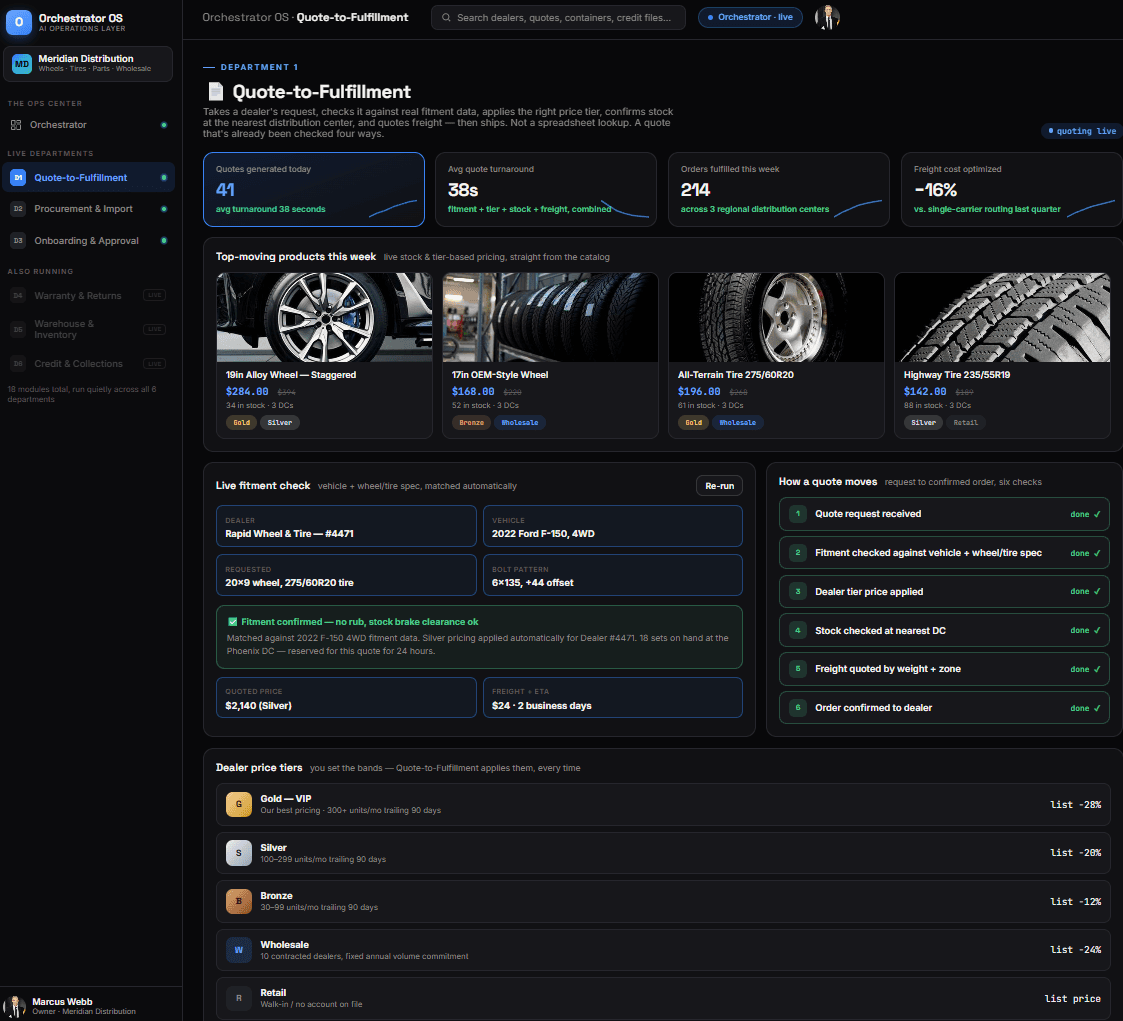
This module completely automates the B2B sales pipeline while strictly enforcing business rules.
- Contextual Quoting: It reads the specific dealer record alongside the required fitment data (the vehicle, the exact size, and the designated price tier that specific dealer actually gets).
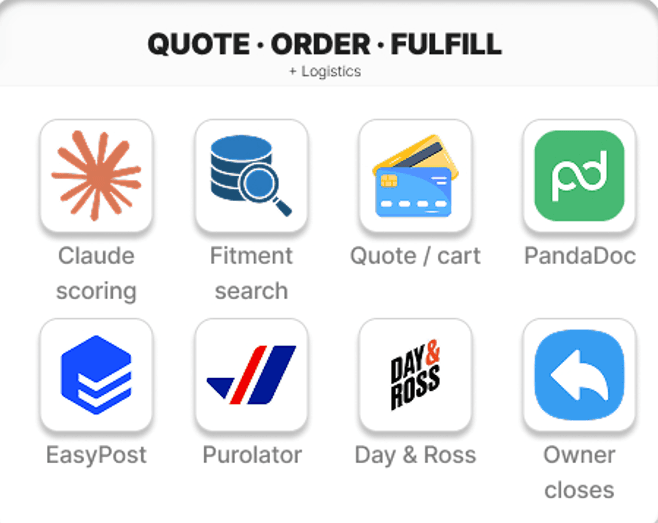
- Automated Assembly: It autonomously builds the comprehensive quote, handling the scoring, fitment search, necessary paperwork, and freight calculations.
- Strict Margin Control: The AI operates within absolute boundaries. It cannot quote a price that falls outside the dealer's assigned tier. If a price is not on the established ladder, it simply does not get offered.
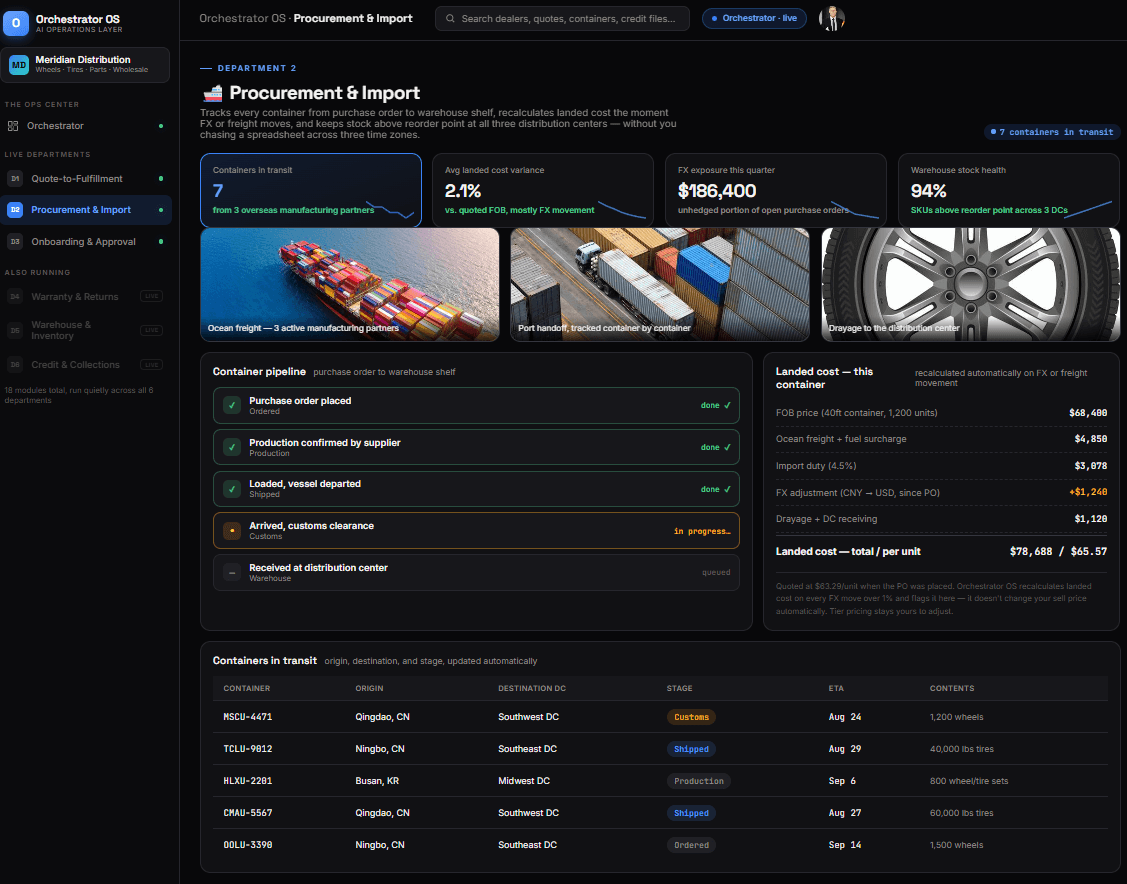
2. Module 2: Procurement & Import (The Supply Chain Brain)
Traditional procurement relies on periodic reviews and reactive purchasing. This agentic module operates in real-time to ensure the warehouse never runs dry.
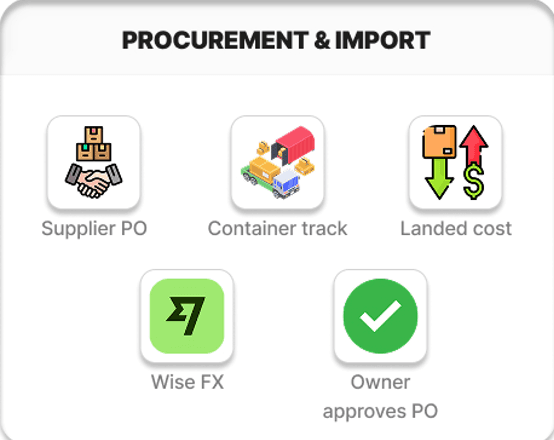
- Live Tracking & Costing: It tracks inbound shipping containers and instantly recalculates the landed cost the exact moment foreign exchange (FX) rates fluctuate or a supplier updates their pricing. You catch margin compression before you sell at a loss.
- Predictive Purchasing: It actively drafts the next purchase order before a hot SKU hits zero, effectively rebuilding the traditional buyer's job into a continuous, automated loop instead of a quarterly task.
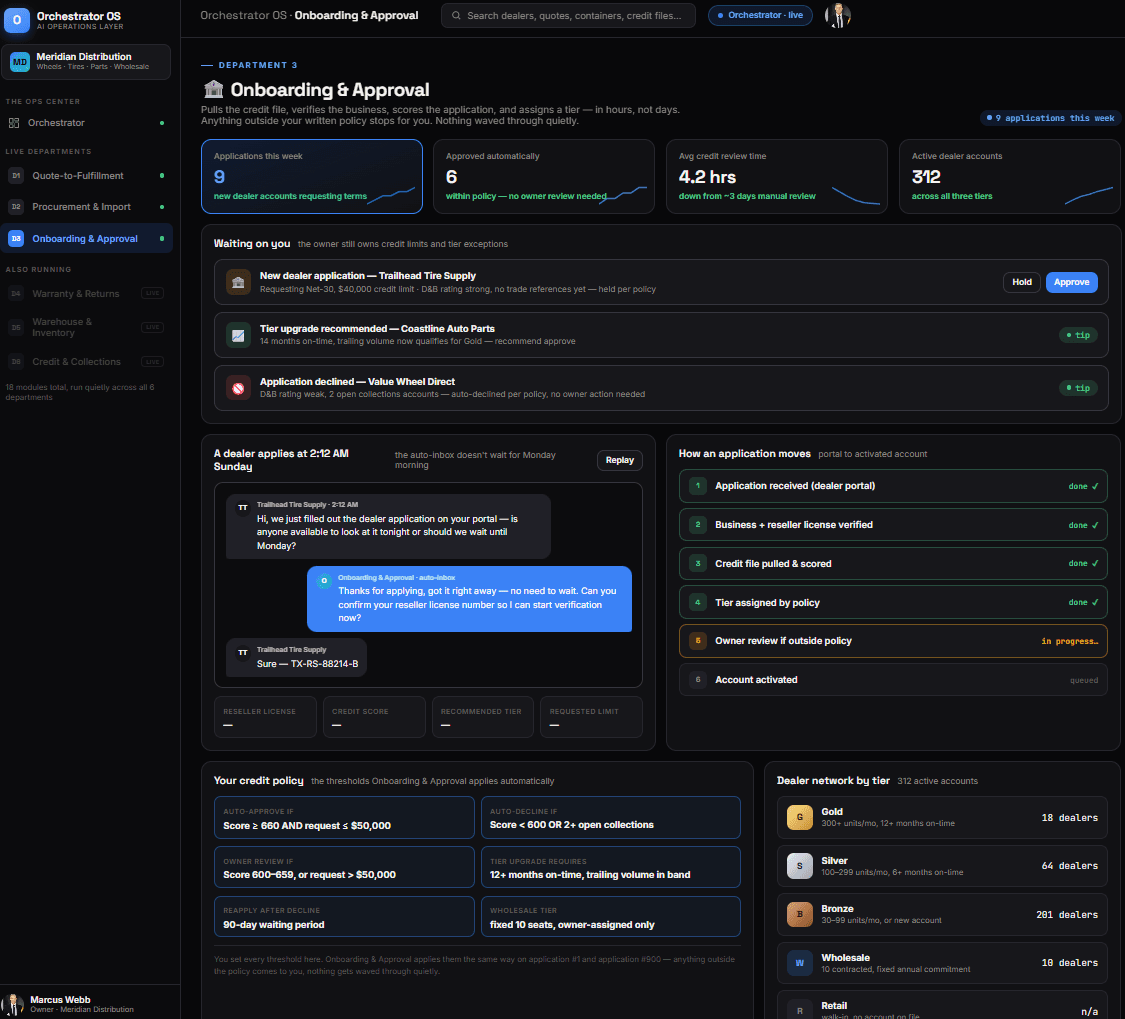
3. Module 3: Onboarding & Approval (The Gatekeeper)
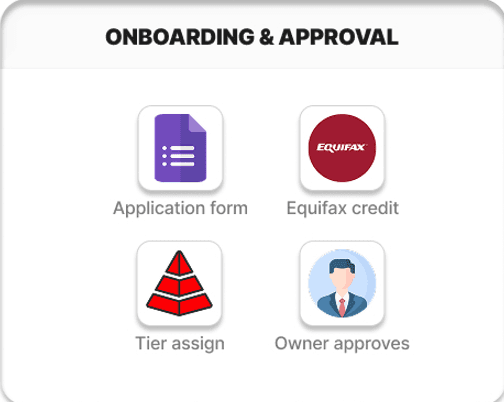
Speed is a massive competitive advantage in B2B onboarding. This module eliminates the waiting period.
- Instant Processing: If a prospective dealer submits an application at 2:00 AM on a Sunday, the system does not place it in a Monday morning queue.
- Autonomous Decisions: It immediately pulls the applicant's credit file, assigns the appropriate pricing tier, and leaves the approved account sitting ready before Monday morning. It delivers a decision, not a backlog.
4. The Orchestrator & The Human Layer
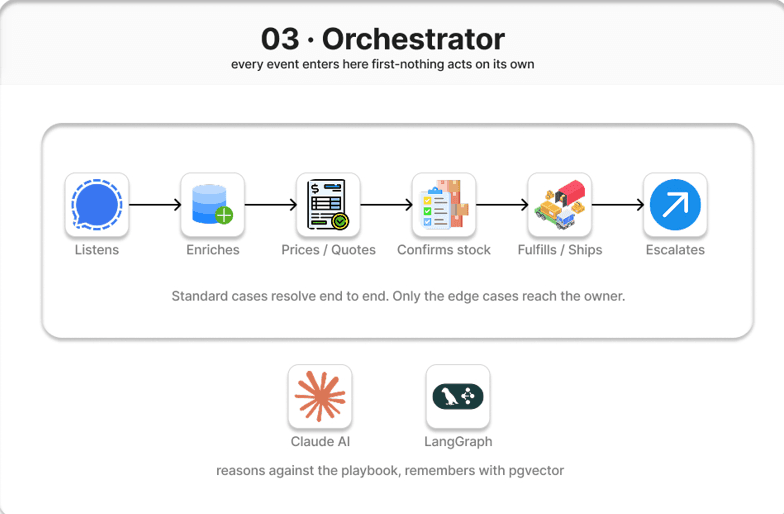
A system of 55 agents requires a rigid chain of command to prevent chaos.
- The Orchestrator: Sitting at the absolute top of the system is the master orchestrator. Every single order routes through it first. It cross-checks the price, verifies the stock, and dispatches the execution commands. It does not do the work itself; it acts as the traffic controller, deciding who does the work. If a variable is off, it halts the process and calls the owner.
- The Owner's Cockpit: While the AI handles the execution, the human owner retains absolute control over the rules of the game. The owner dictates the tier pricing, establishes credit limits, and handles anything that reads like a promise—such as warranty approvals and manual refunds. Everything else simply runs.
Conclusion
By transitioning from manual departments to an integrated, 55-agent architecture, automotive companies can operate with unprecedented speed and margin accuracy. The system eliminates the latency of human data entry, ensuring that the business reacts to supply chain shifts and dealer demand in real-time. This structural shift allows the owner to step out of the daily operational friction and focus entirely on high-level strategy and growth.