Most local businesses burn thousands of dollars every month acquiring new customers, completely ignoring the silent leak at the back door: old customers quietly slipping away. Angry texts turn into one-star reviews, and loyal clients fade out because nobody is watching the signals.
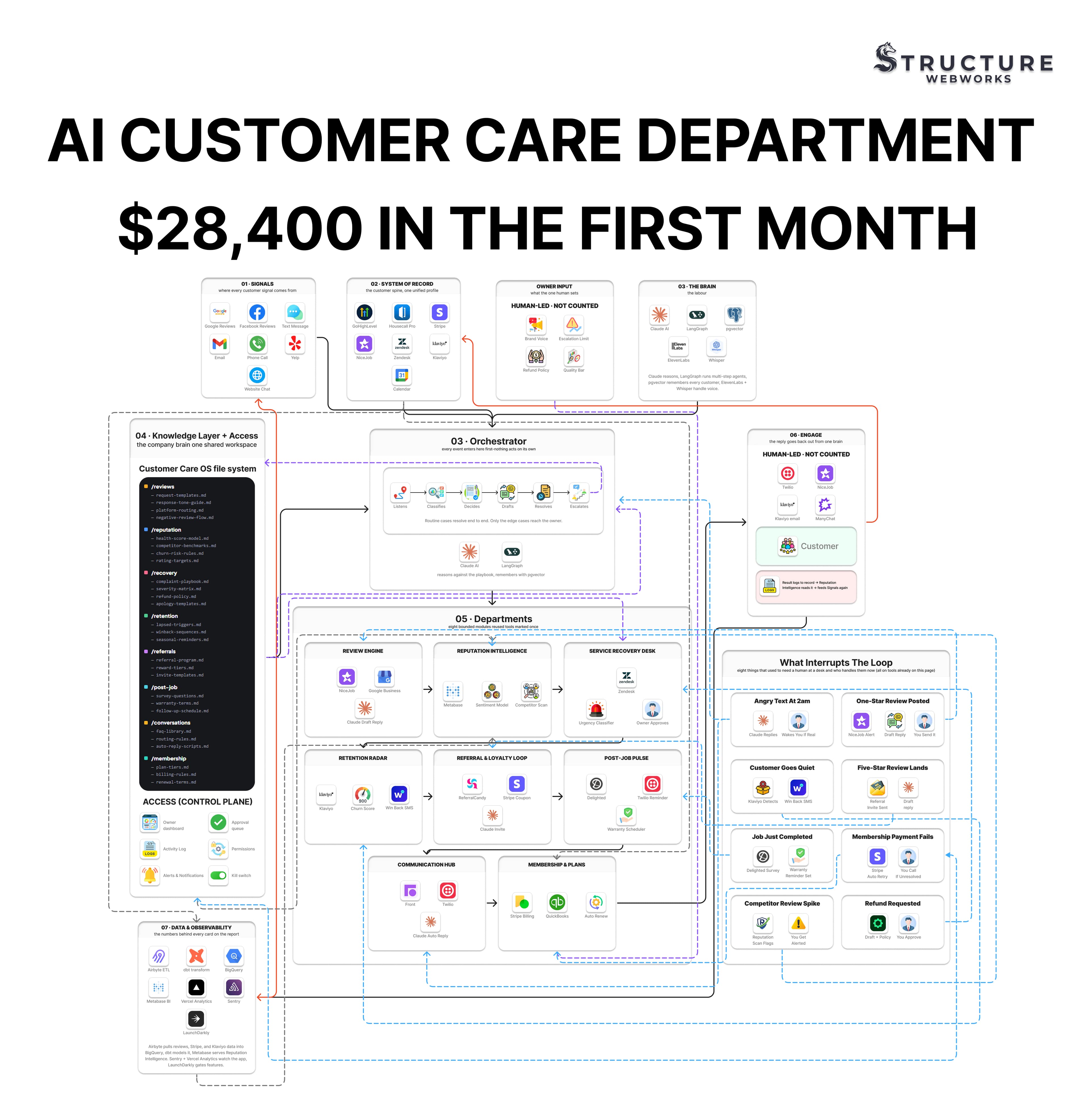
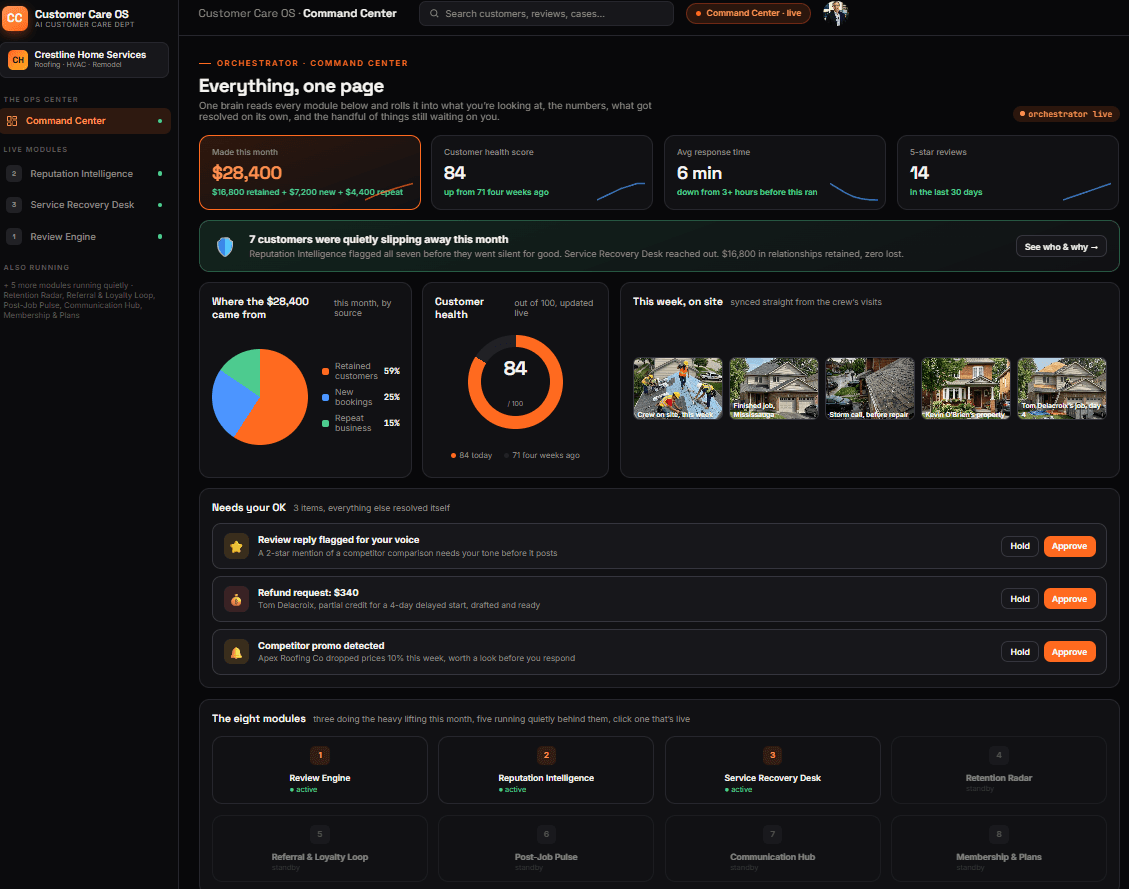
This is the architectural blueprint of an 8-module AI Customer Care Department that plugged that leak and generated $28,400 in its first month without hiring a single extra person. Here is exactly how the central Orchestrator and the top three core modules operate.
1. Reputation Intelligence (The Churn Predictor)
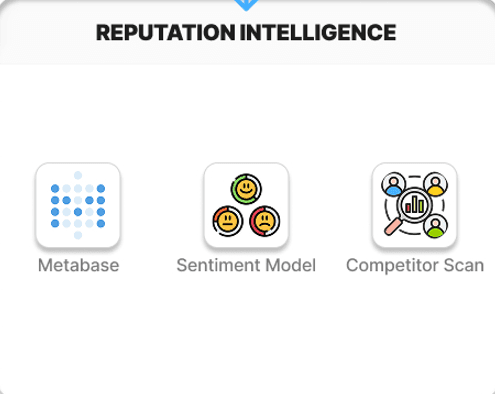
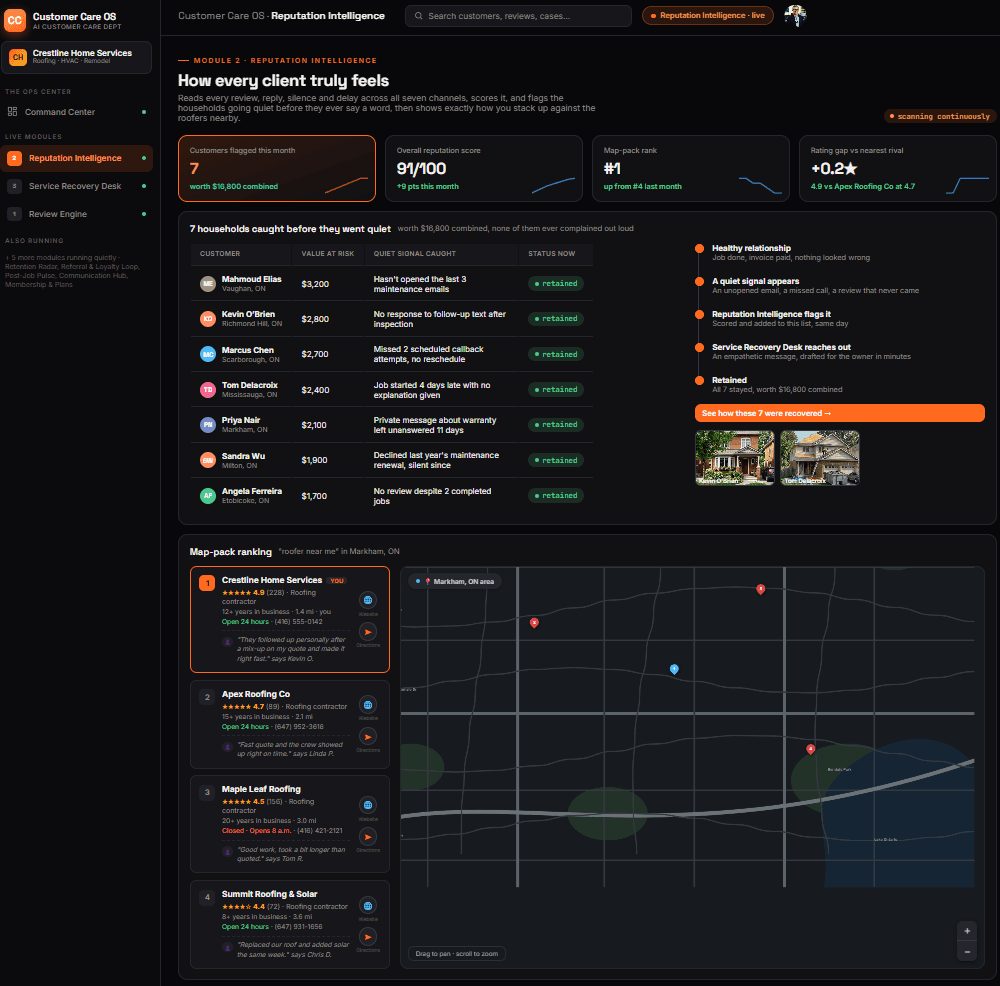
This module does not just read what people type into a review box; it monitors the quiet signals before a customer ever says a word.
- Predictive Analytics: It analyzes customer behavior to identify churn risks and maps exactly how your business compares to local competitors.
- The ROI: In month one, this module flagged seven households—worth over $16,000 combined—that were about to quietly fade away. It gave the owner the visibility to intervene before they were gone.
2. Service Recovery Desk (The Empathy Engine)
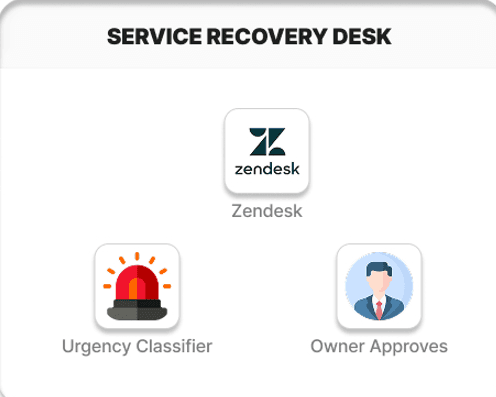
When a customer is upset, speed and context are everything.
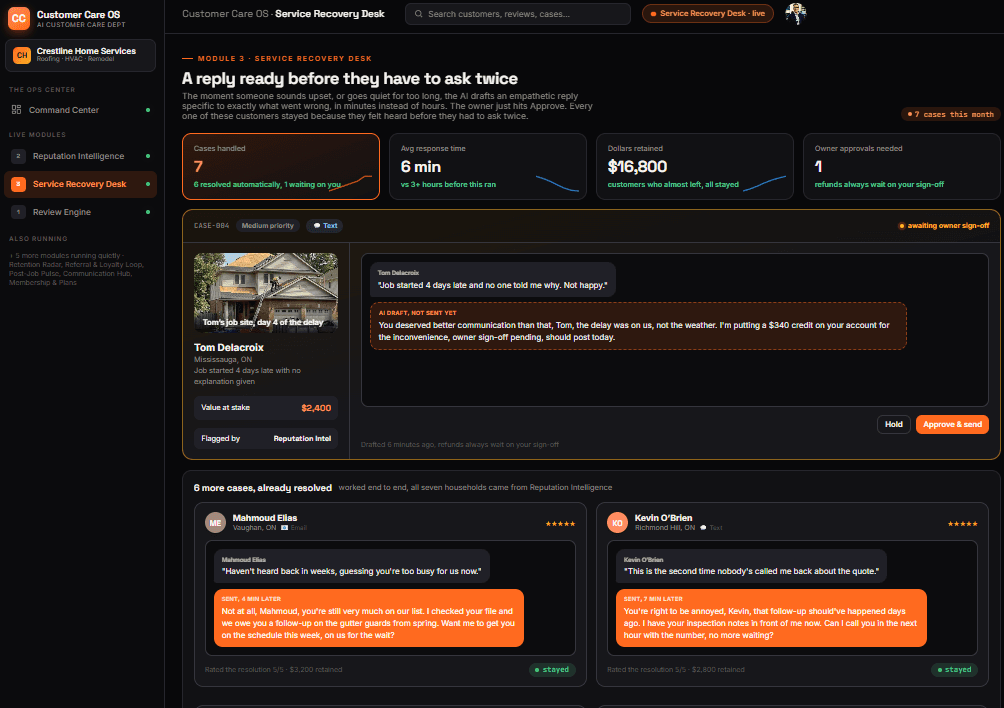
- Rapid Response: The moment a negative signal or angry text is detected, the AI drafts a highly specific, empathetic reply in minutes, not hours. It addresses exactly what went wrong for that specific client.
- Human Approval: The AI does not send the message blindly. The owner simply reviews the drafted apology and hits "approve." Every one of those flagged clients stayed because they felt heard instantly.
3. Review Engine (The Organic Growth Driver)
Getting reviews is usually an awkward, manual process. This module automates the ask.
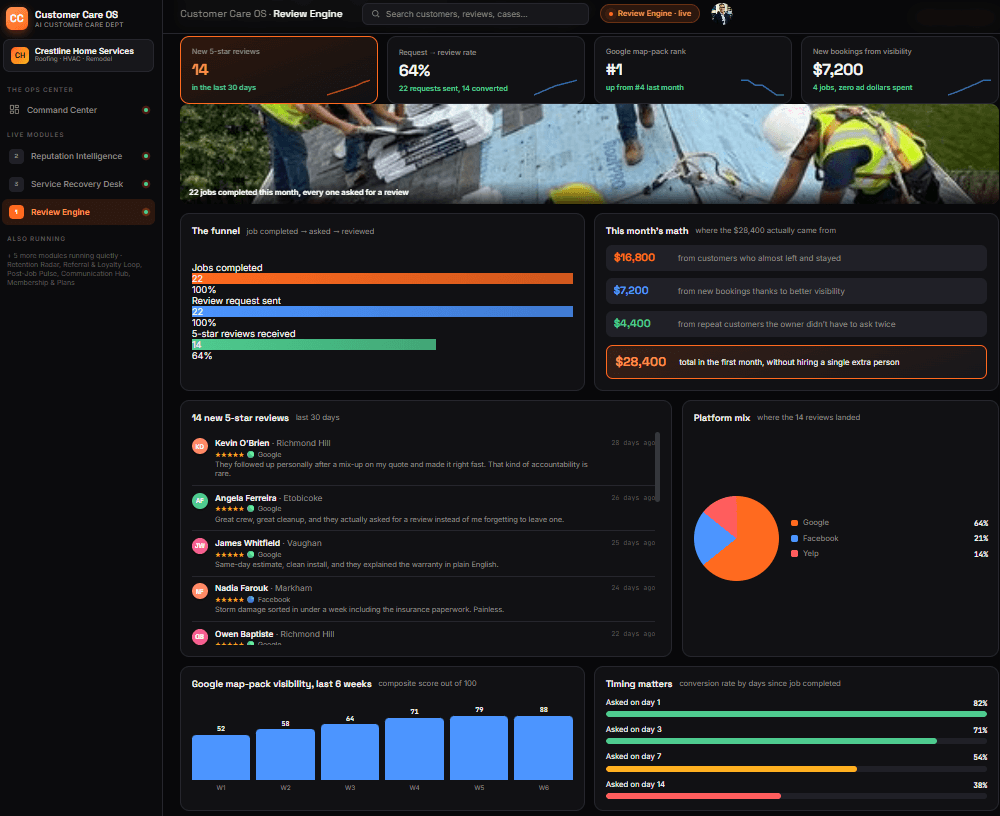
- Precision Timing: Every happy customer is automatically asked for a review at the exact moment of peak satisfaction following a completed job.
- The ROI: This system captured 14 new 5-star reviews in 30 days. The Google ranking jumped, driving new organic customers to the business without spending a single extra dollar on ads.
4. The Orchestrator & The Human Layer
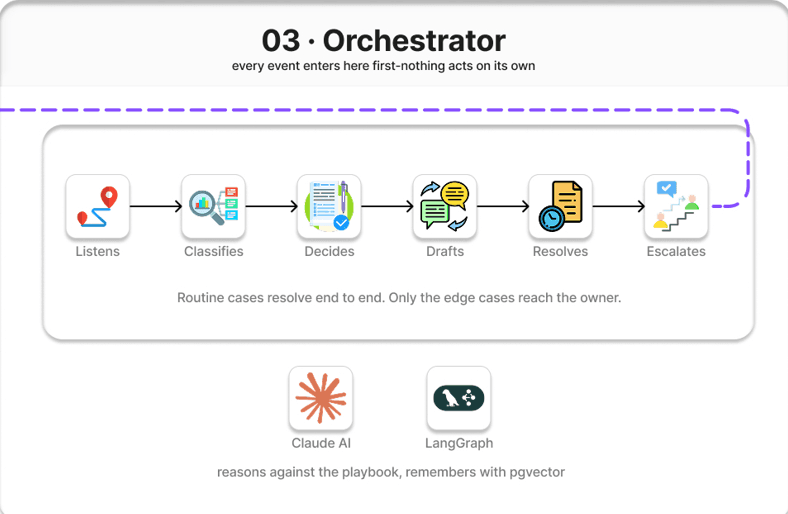
Behind these modules sits one central Orchestrator. It manages the 8 different departments, rolling every data point into a single weekly report.
- Customer Health Score: It tracks the one metric that matters most—the overall health score of the client base.
- The Human Boundary: The Orchestrator flags and holds anything unusual for the owner's manual sign-off. The human owner still owns every apology that matters and every relationship worth keeping personal. Everything else watches, drafts, and reports on its own.
Conclusion
By shifting from reactive damage control to an autonomous, predictive architecture, customer care transforms from a cost center into a revenue engine. In just 30 days, this system secured $16,800 in retained customers who almost left, $7,200 in new bookings from better search visibility, and $4,400 in passive repeat business. That is a $28,400 return on an AI architecture that never sleeps.