When businesses scale, their tech stacks usually become a fragmented mess of isolated dashboards. This is what a $15,000 agentic AI marketing system for a local business actually looks like when you solve that problem.
Powered by specialized agents and connected through advanced workflow automation, this architecture seamlessly operates over 50 external platforms—including HubSpot, Meta Ads, GA4, Klaviyo, and Webflow.
The most critical paradigm shift in this design: It doesn't replace your tech stack. It runs your tech stack. Let's break down how these autonomous agents communicate, execute, and report.
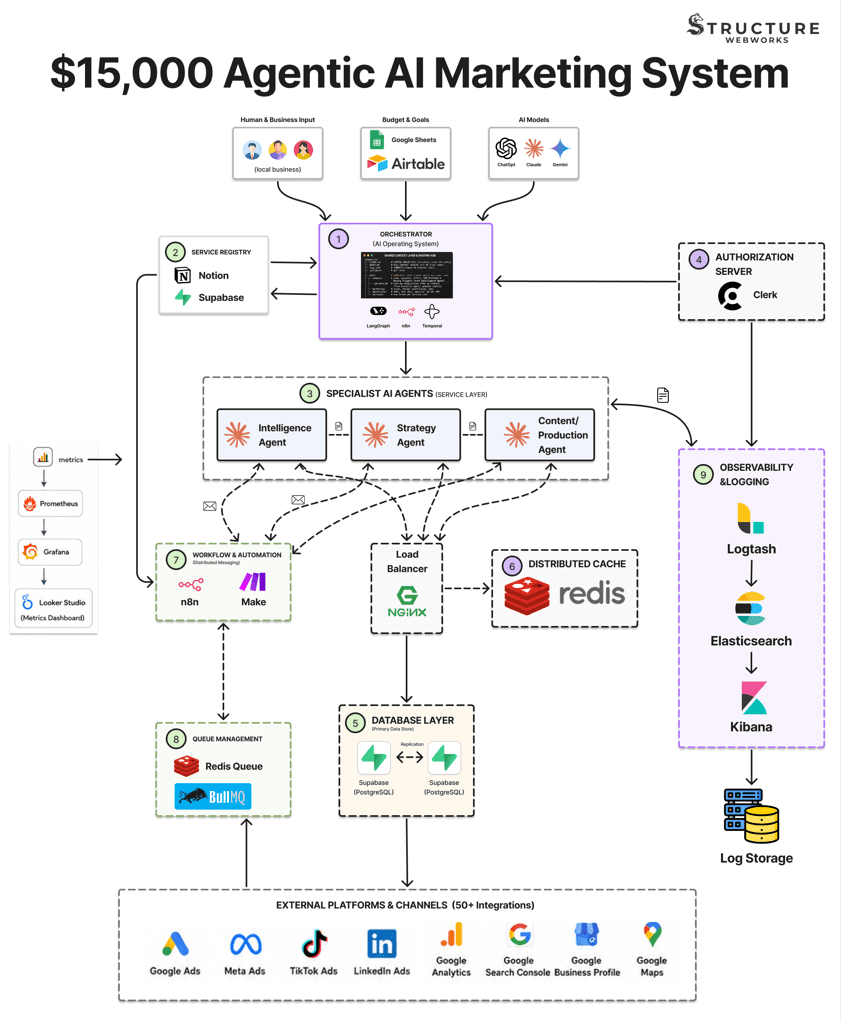
1. The Core Loop (The Execution Pipeline)
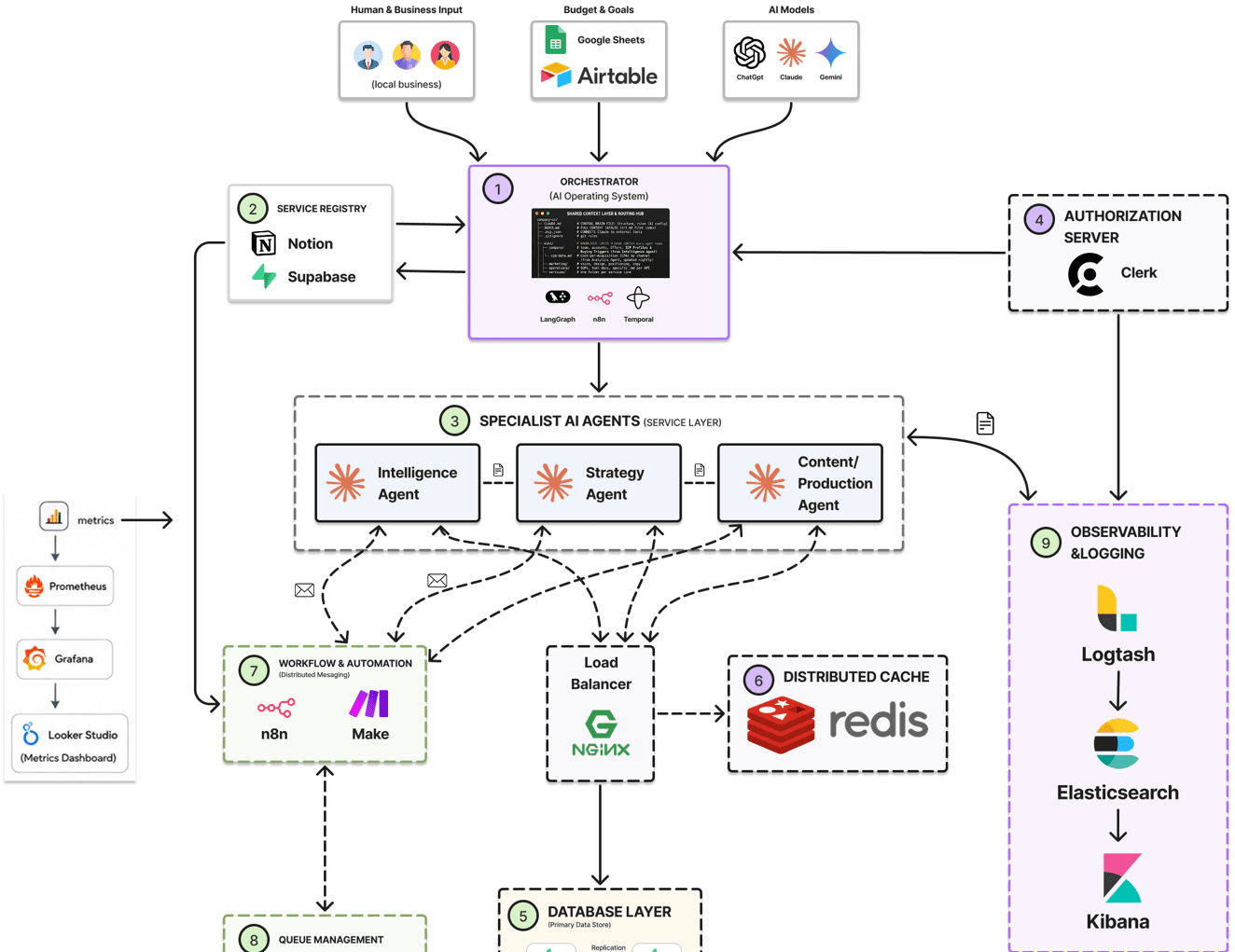
Before diving into specific modules, it is essential to understand the master data flow. The entire system operates on a continuous, self-optimizing loop:
- Intelligence finds the market angle.
- Strategy turns that angle into a structured plan and a budget allocation.
- Production builds the actual creative assets and copy.
- Distribution pushes those assets live into paid media, social channels, email lists, and the website.
- Analytics measures the financial results and feeds that data directly back into Intelligence to start the loop over.
2. Module 1: Market Intelligence (The Foundation)
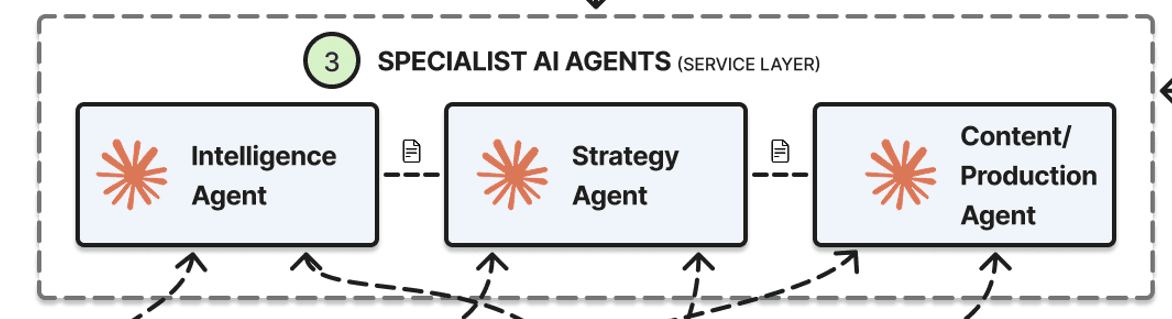
This module runs before a single word of marketing copy gets written. It autonomously scrapes competitor ads, landing pages, and active market offers, while cross-referencing your internal customer reviews and transcribed sales calls.
The Architectural Difference: The output of this agent is not a static PDF report for a human to read. The output is structured data—three Ideal Customer Profiles (ICPs) and a distinct list of buying triggers. These are written directly into a shared Context Folder so every subsequent agent in the pipeline reads it before executing their tasks.
3. Module 2: Analytics & Attribution (The Feedback Engine)
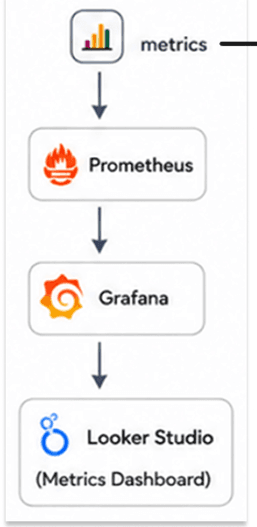
Most companies build their analytics layer last. In an agentic architecture, you must build it first.
Every night, this module pulls raw ad spend from Meta and Google, conversion events from GA4, and closed revenue data from the CRM. It calculates the exact Cost-Per-Acquisition (CPA) by channel and writes that financial reality back into the shared context folder. This ensures the Strategy agent is always budgeting based on yesterday's actual ROI, not last quarter's assumptions.
4. Integration: How 10 Agents Talk to Each Other
![Workflow & Automation Block (n8n/Make) & Database Layer]](/_next/image?url=https%3A%2F%2Fwyfgcvlldserwnxmhars.supabase.co%2Fstorage%2Fv1%2Fobject%2Fpublic%2Fmedia%2FMake)%20%26%20Database%20Layer.png&w=3840&q=75)
How do ten independent AI agents avoid tripping over each other? The answer is a Shared Context Layer (powered by databases like Supabase and cached via Redis). Every agent reads from and writes back to this centralized brain.
Coupled with workflow automation tools (like n8n or Make) and direct API connections, this architecture bridges the gap between an AI chatbot that merely suggests an email campaign, and an Agentic System that actually builds, schedules, and ships it in Klaviyo.
5. The Orchestrator & The Human (Supervised Execution)
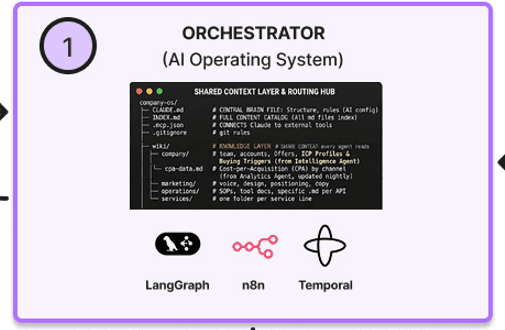
Sitting at the absolute top of the hierarchy is the Orchestrator. It does not do the ground-level tasks. It routes them, holds the budget parameters, and decides what actions require human authorization.
Because in this architecture, you (the business owner) are still in the loop—you are just no longer in the "doing." You transition from managing eight employees to reviewing about six high-leverage decisions a week.
This system is not fully autonomous. It is highly supervised, incredibly scalable, and mathematically precise.
Conclusion
The true power of this $15,000 architecture is not in replacing your software—it is in unifying it. By deploying specialized agents connected through a shared context layer, businesses can transform a fragmented tech stack into a cohesive, autonomous revenue engine. The future of marketing is no longer about hiring more hands to push buttons; it is about deploying intelligent systems that execute the work, leaving the human leader to steer the strategy.