A traditional local service business is typically weighed down by overhead. Running operations requires a receptionist, an estimator, a dispatcher, a project manager, and a bookkeeper.
This is what happens when you replace that entire payroll overhead with an autonomous 40-agent AI Operating System.
The fundamental principle behind this design is simple: a local service business is not a funnel; it is a closed loop. Marketing rings the phone → Intake catches it → Sales qualifies and books → Operations executes the job → Finance gets you paid → That revenue dictates next week's ad budget.
Here is the architectural blueprint of how 40 specialized AI agents manage the entire company lifecycle with zero human employees.
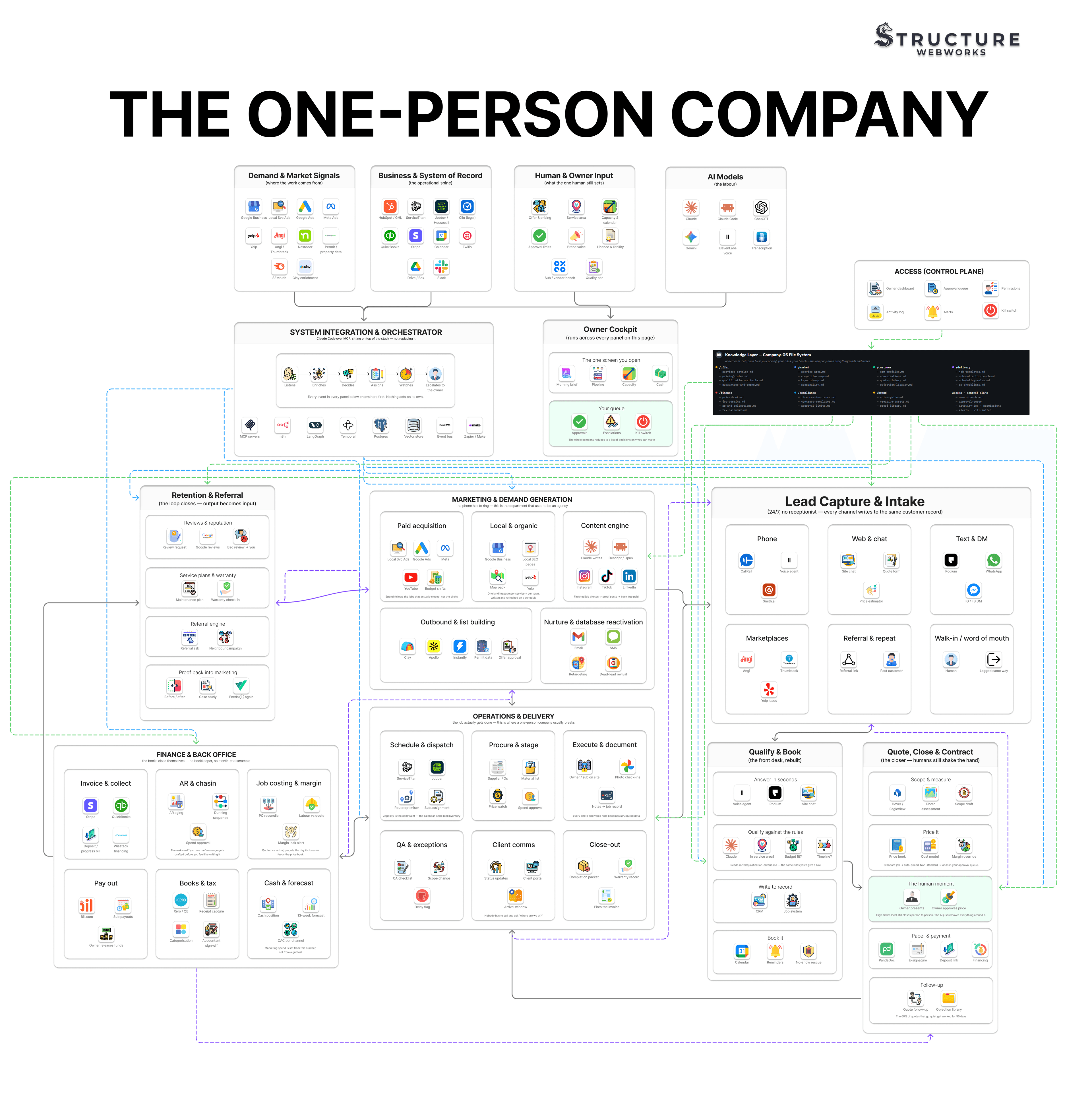
1. Marketing & Intake (The Revenue Front-End)
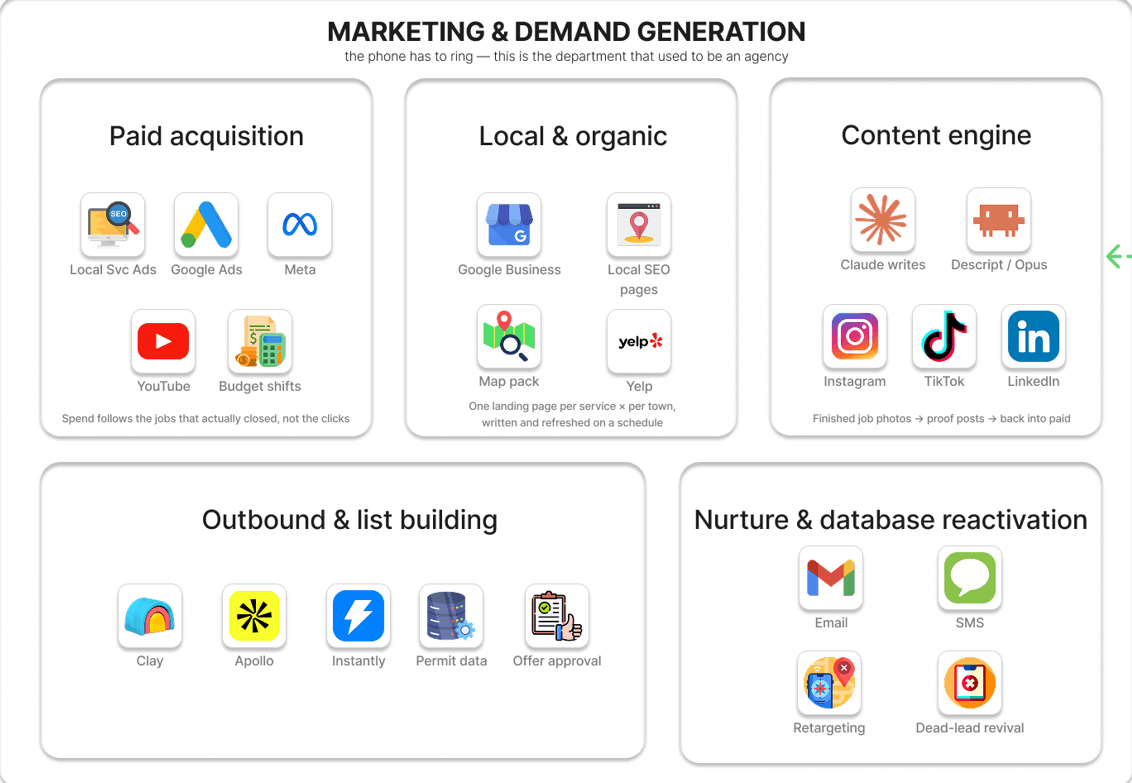
Speed to lead and calendar accuracy are fully automated from the very first touchpoint.
- Omnichannel Ingestion: Whether a customer calls, texts, sends an Instagram DM, or starts a website chat, every channel routes into the same central intelligence.
- Live Calendar Sync: The agents read your live availability in real time, completely eliminating double-bookings or false promises.
- Autonomous Scoping: The agent qualifies the lead against a plain-text rules file you write once, gathers job requirements, generates the quote, and sends it directly to the prospect.
- The Human Closer: Then the automation stops. Closing the deal and negotiating final terms remains strictly with you—the business owner.
2. Operations & Delivery (The Autonomous Job Site)
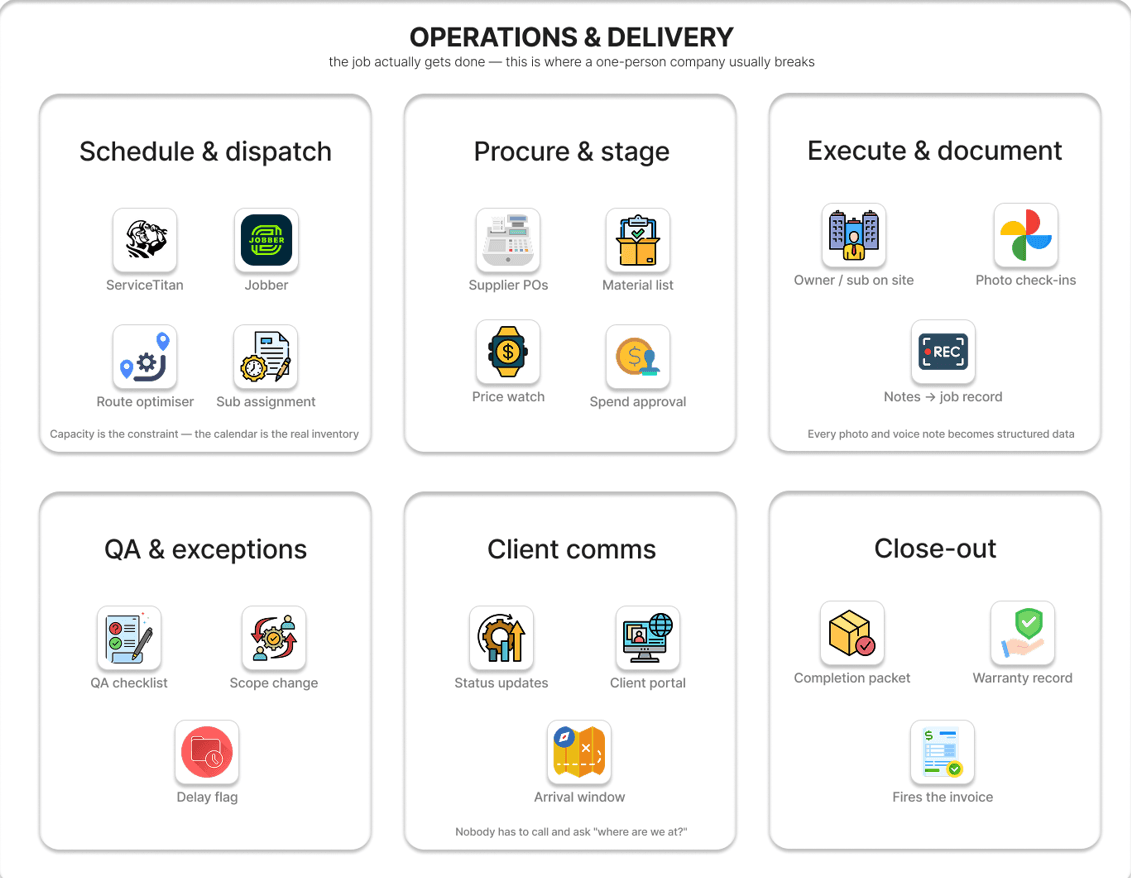
Operations is traditionally the messiest part of running a field service business. This module handles execution and exceptions automatically:
- Scope-to-Materials: The moment a contract is signed, the system instantly transforms the agreed scope into a detailed materials list for procurement.
- Exception Handling & Bench Routing: If a subcontractor fails to show up on-site, the agent automatically flags the issue, pulls the next vetted contractor from your backup roster, and notifies the client before you even check your phone.
- Automated Close-Out: As soon as the crew marks the job complete, the system automatically prepares and dispatches the final invoice without manual data entry.
3. Finance & Margin Optimization (The Feedback Loop)
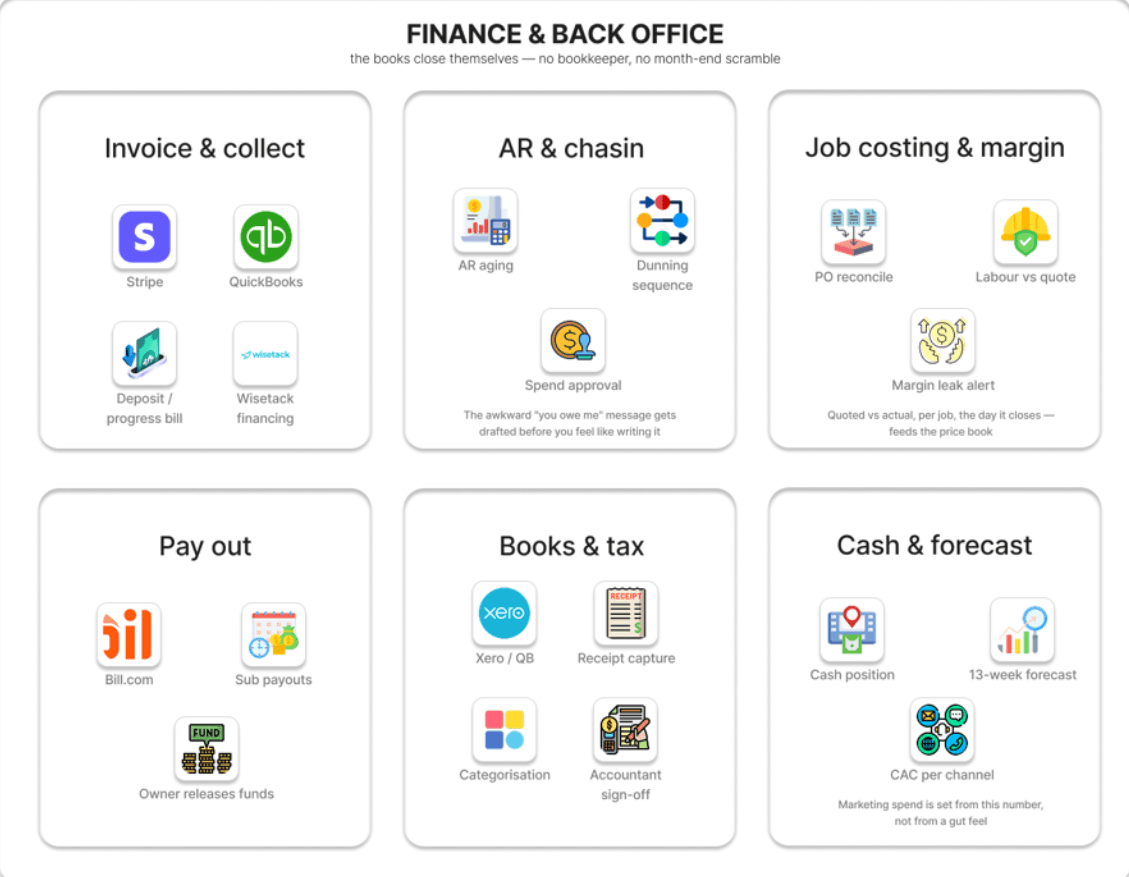
In this architecture, finance is no longer a slow back-office department—it is an automated event triggered by job completion.
- Automated Collections: Payments process instantly through Stripe. If an account is 30 days overdue, the system automatically drafts and sends follow-up collection notices.
- Job Costing & Dynamic Pricing: The finance agent cross-references the initial quote against the actual labor and materials consumed. If margins compress, it automatically suggests updated pricing models to keep your business profitable.
4. The Orchestration Layer: MCP & Plain Files
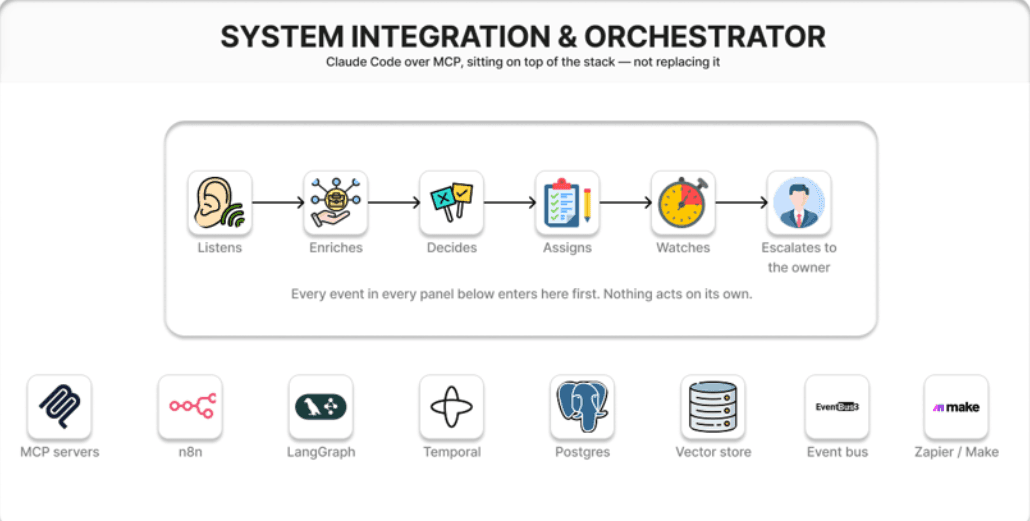
None of this operates smoothly if your software stack remains disconnected.
- Claude Code via MCP: At the top sits Claude Code, communicating over the Model Context Protocol (MCP) directly into your CRM, dispatch system, and accounting software.
- The Rules Engine: Underneath the orchestrator are simple, human-readable files containing your pricing logic, operating boundaries, and subcontractor bench.
The division of labor is absolute: AI moves the information; you move the money and manage the risk.
Conclusion
Building a scalable local business no longer requires building a massive payroll. By deploying an interconnected 40-agent operating system, a single founder can run field operations, customer intake, and financial reconciliations with machine precision. The business owner transitions from a daily coordinator to a true capital allocator.