The traditional automotive retail model is broken, burdened by software bloat. Currently, a dealership operates on dozens of isolated platforms, forcing human employees to manually pass data between screens.
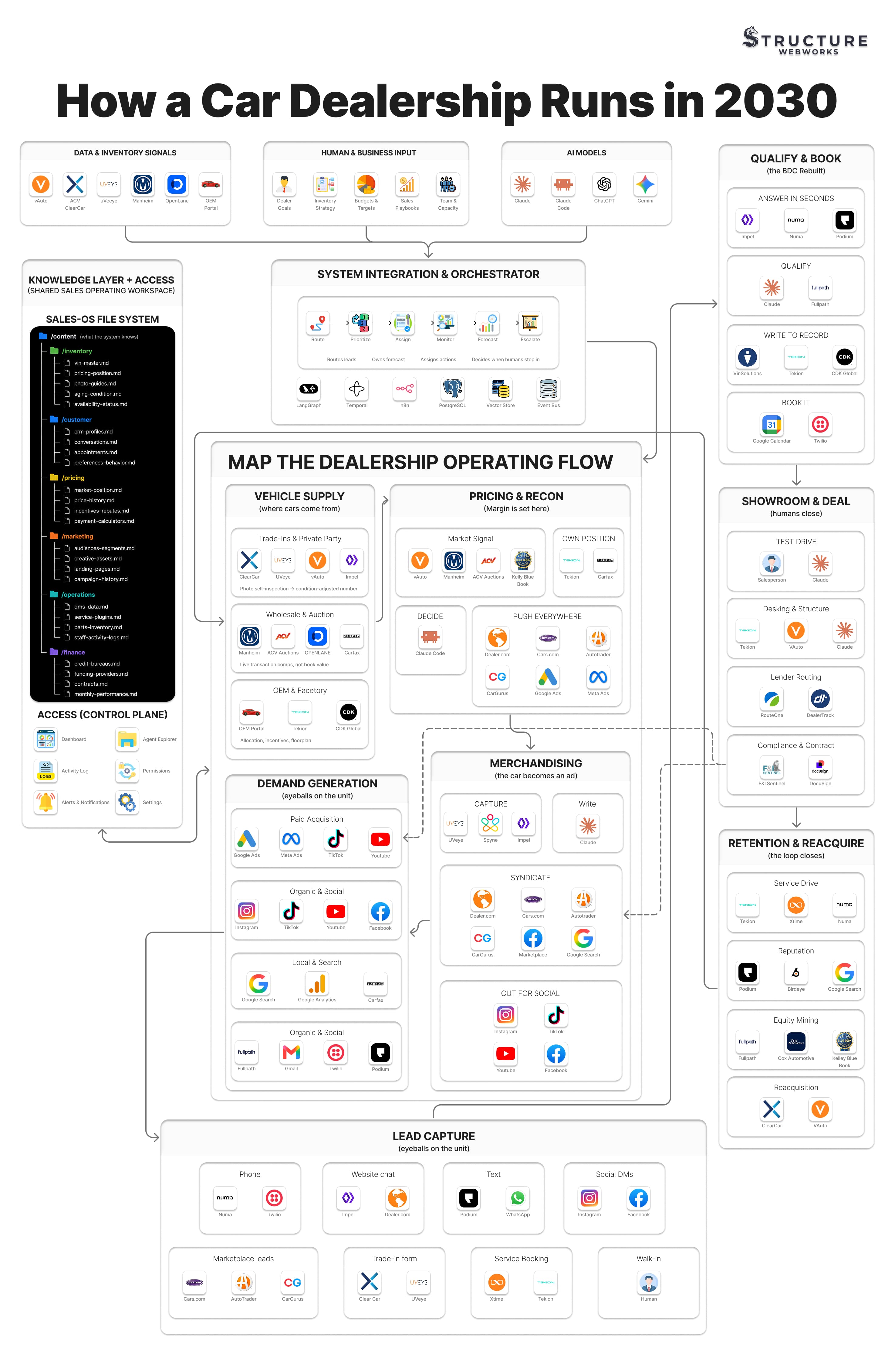
By 2030, this changes entirely. A $30,000 agentic AI system doesn't replace the dealership's tech stack; it wires it together. The dealership transforms into a continuous, 8-stage autonomous loop: supply, pricing, merchandising, demand, capture, booking, the deal, and retention (which circles back to feed supply).
Here is the architectural breakdown of how these tools finally talk to each other, orchestrated by a central AI brain, and the three core modules that drive a car off the lot.
1. The Orchestrator: The Central Brain
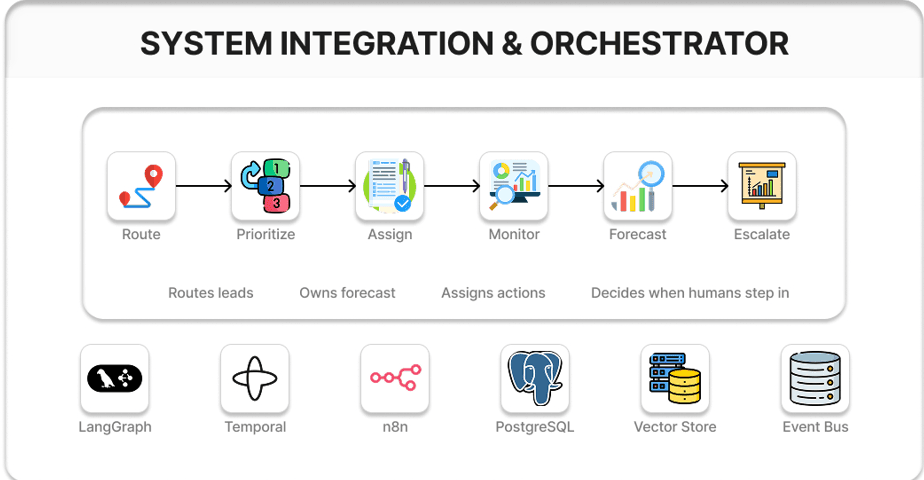
Sitting above the entire operation is the Orchestrator—Claude Code.
None of this architecture works if the tools remain siloed. Claude acts as the cognitive layer wired directly into the DMS (Dealer Management System), the CRM, and the ad accounts. It doesn't just read data; it routes context. It ensures that the marketing budget knows what the inventory is doing, and the showroom floor knows what the BDC (Business Development Center) promised.
2. Module 1: Demand Generation (Eyeballs on the Unit)
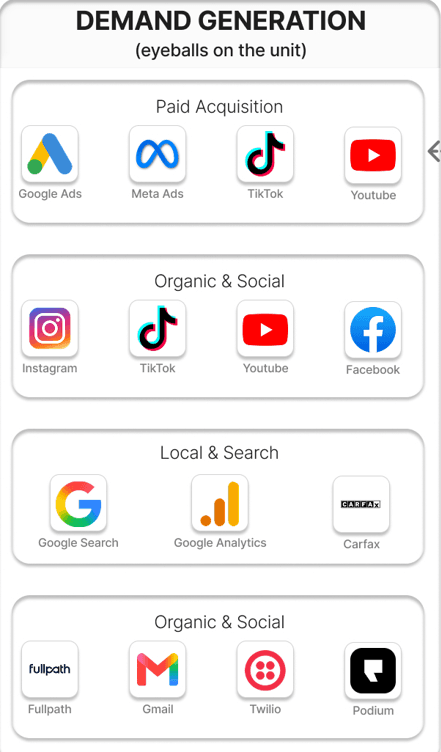
Marketing is no longer a guessing game; it is triggered by live inventory signals.
- Inventory Triggers: vAuto monitors the lot. If it flags a unit that has been sitting for 40 days, the system automatically dynamically shifts ad budget directly onto that specific VIN.
- Omnichannel Syndication: Dealer.com's inventory feed instantly pushes that aging unit into Google Vehicle Listing Ads and Meta's dynamic catalogs.
- Creative Automation: The raw photo pack, already processed by Spyne, is autonomously cut into highly engaging Reels for Instagram and TikTok.
- Predictive Targeting: Fullpath—which sits directly on your CRM, DMS, and website traffic—analyzes the data to decide exactly who in your market is most likely to buy that specific vehicle today.
3. Module 2: Qualify and Book (The Autonomous BDC)
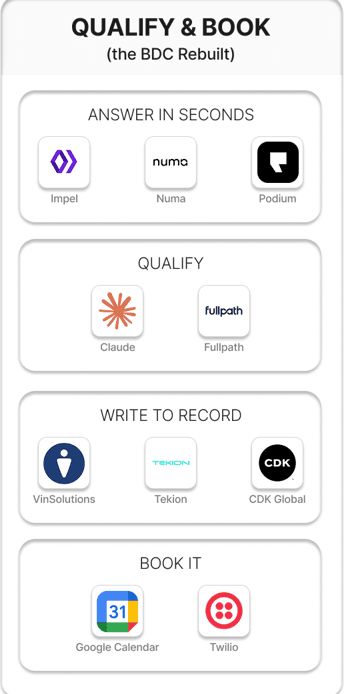
Once a prospect clicks, the clock starts. Speed to lead is automated across every channel with zero latency.
- Omnichannel Routing: If a call comes in, Numa picks it up. If it’s an Instagram DM, Impel answers. If it’s an SMS text, Podium responds.
- Live Data Sync: All three conversational agents read live inventory data. This eliminates the fatal error of promising a customer a car that was sold 20 minutes ago.
- Qualification & CRM Sync: The agents qualify the buyer's budget, timeline, and trade-in. They write every detail into VinSolutions. The result is one unified customer record, not five fragmented ones.
- Automated Trade-In: The trade-in evaluation is routed to ACV's ClearCar. The customer takes photos of their own car in the driveway and receives a real, actionable wholesale number back instantly.
4. Module 3: Showroom and Deal (The Human Close)
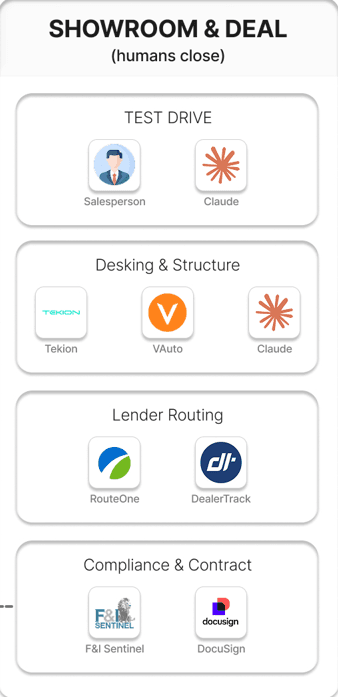
When the customer physically shows up, the dynamic shifts. The AI steps back to assist, and the human takes the spotlight.
- The AI Briefing: Before the customer even walks through the doors, the salesperson is briefed. Claude has read the entire communication thread, summarizing exactly what the buyer was quoted and what their trade is worth. The car is already pulled up to the front.
- Dynamic Structuring: While the customer is out on the test drive, Tekion and vAuto are working in the background, autonomously building the payment grids based on live rates and margins.
- F&I & Contracting: The credit profile is fired out to RouteOne and Dealertrack, returning approvals side-by-side. F&I Sentinel verifies the product and compliance packages, seamlessly moving the deal into e-contracting.
Conclusion
The dealership of 2030 is not about eliminating the human salesperson; it is about eliminating the friction that prevents them from selling. By connecting 12 separate logins into one unified, agentic pipeline, dealerships can capture demand instantly, qualify with machine precision, and empower their showroom staff with total context. This is the difference between a fragmented tech stack and a true Dealership Operating System.