Most contractors do not actually have a marketing problem. They have a follow-up problem, an intake problem, and a fundamental lack of operational visibility. When an owner is stuck on a ladder or at a job site, inbound leads go cold, and marketing dollars are wasted.
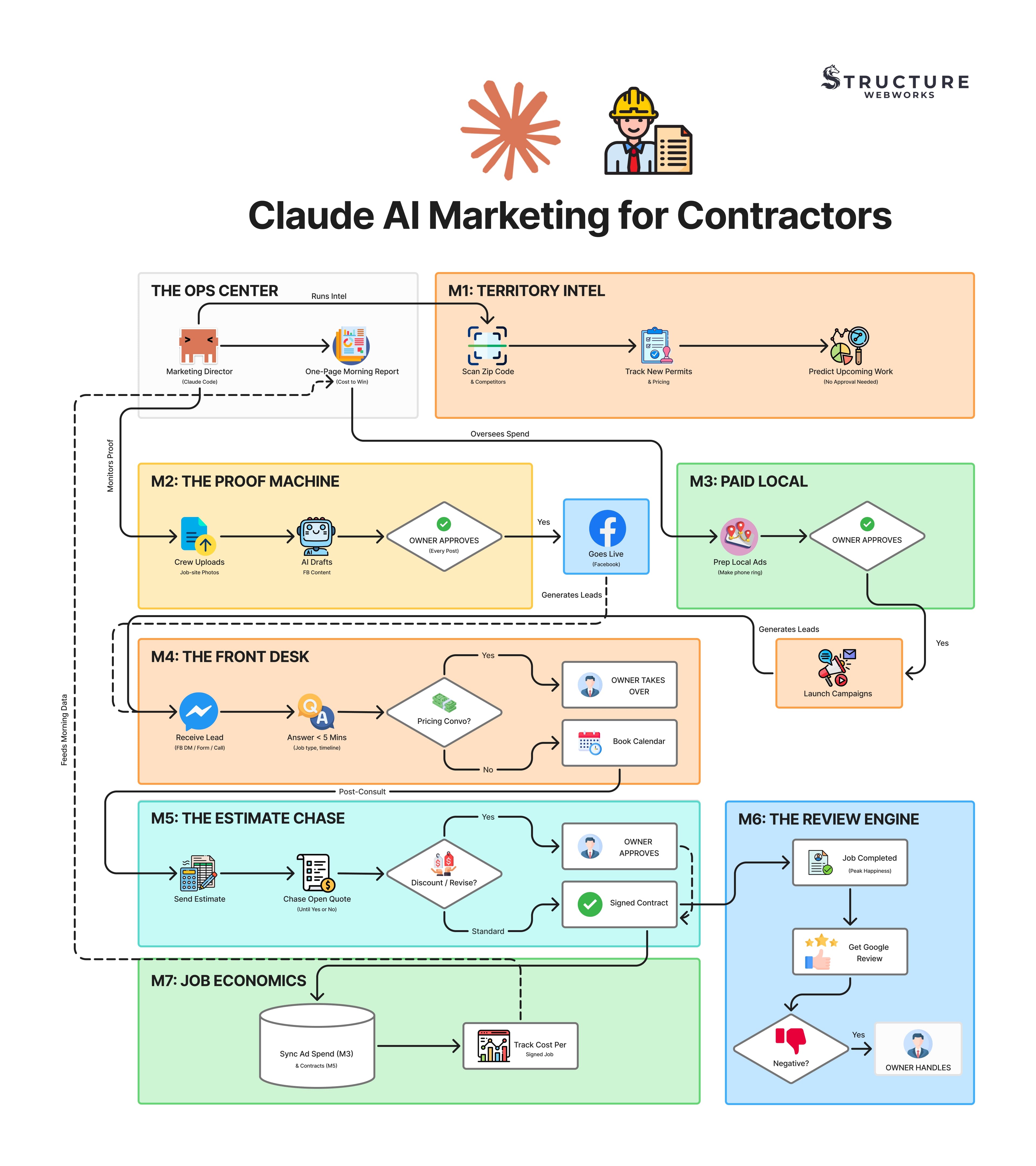
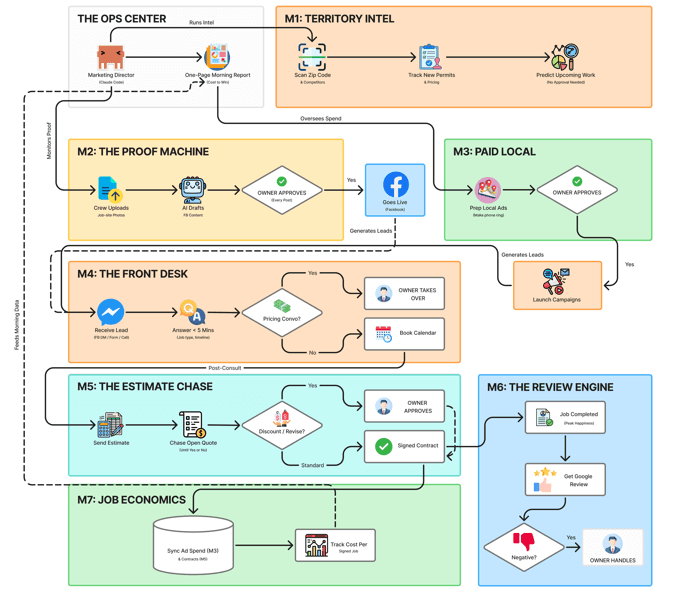
To solve this operational bottleneck, a $20,000 autonomous AI marketing architecture powered by Claude was engineered. Instead of relying on fragmented software, this system deploys seven specialized agents to manage the entire pipeline. While the full stack handles everything from content proofing (M2) to automated review generation (M6), let's break down the central brain and the three core modules that dictate revenue.
1. The Orchestrator (The Ops Center)

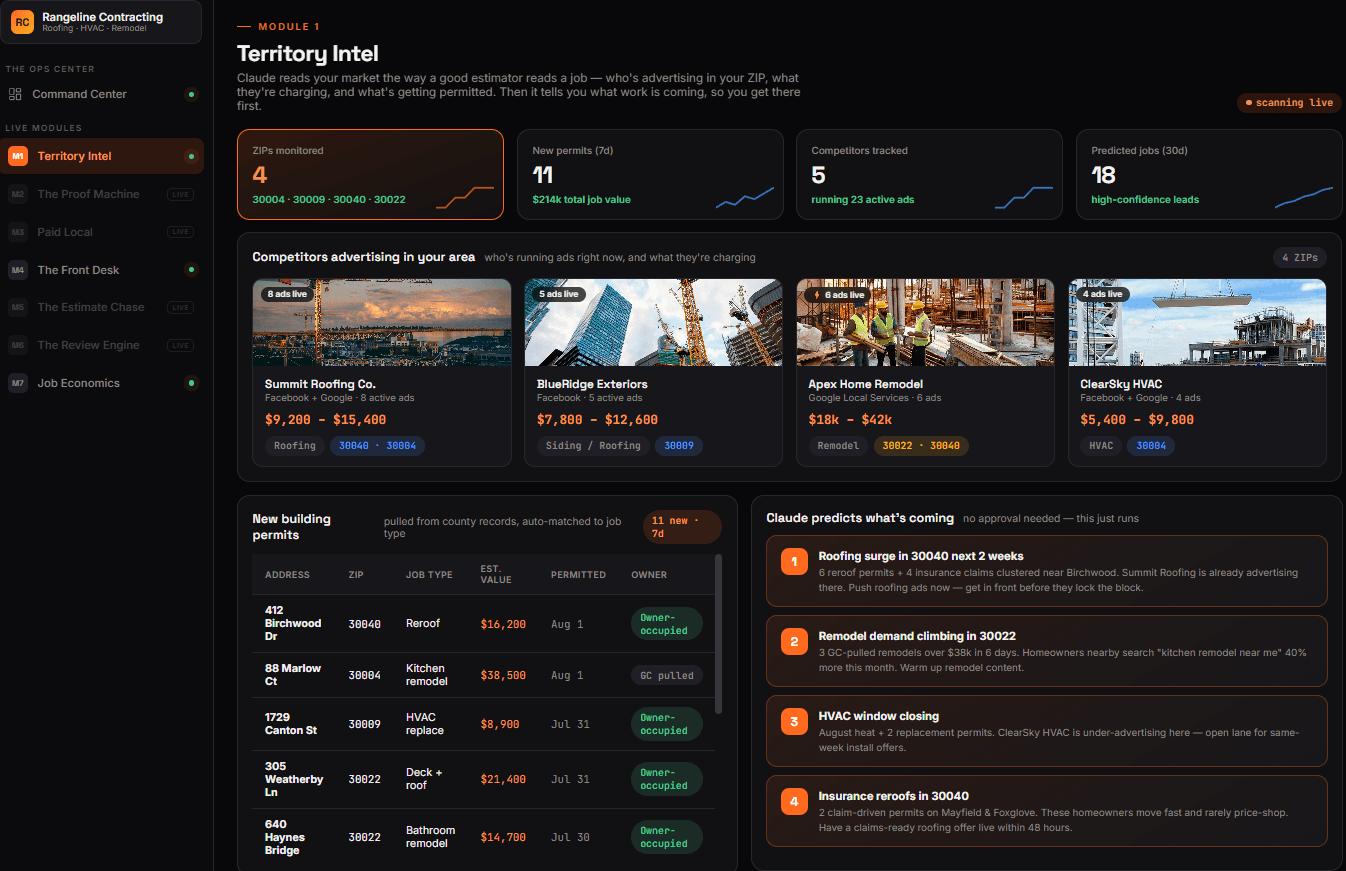
At the core of the system sits The Ops Center, managed entirely by Claude Code. This acts as a relentless Marketing Director that never needs a truck, a lunch break, or a day off. It orchestrates all seven modules, monitors the data flow, and consolidates the entire operation into a single, actionable One-Page Morning Report for the owner.
2. Module 1: Territory Intel (The Market Predictor)

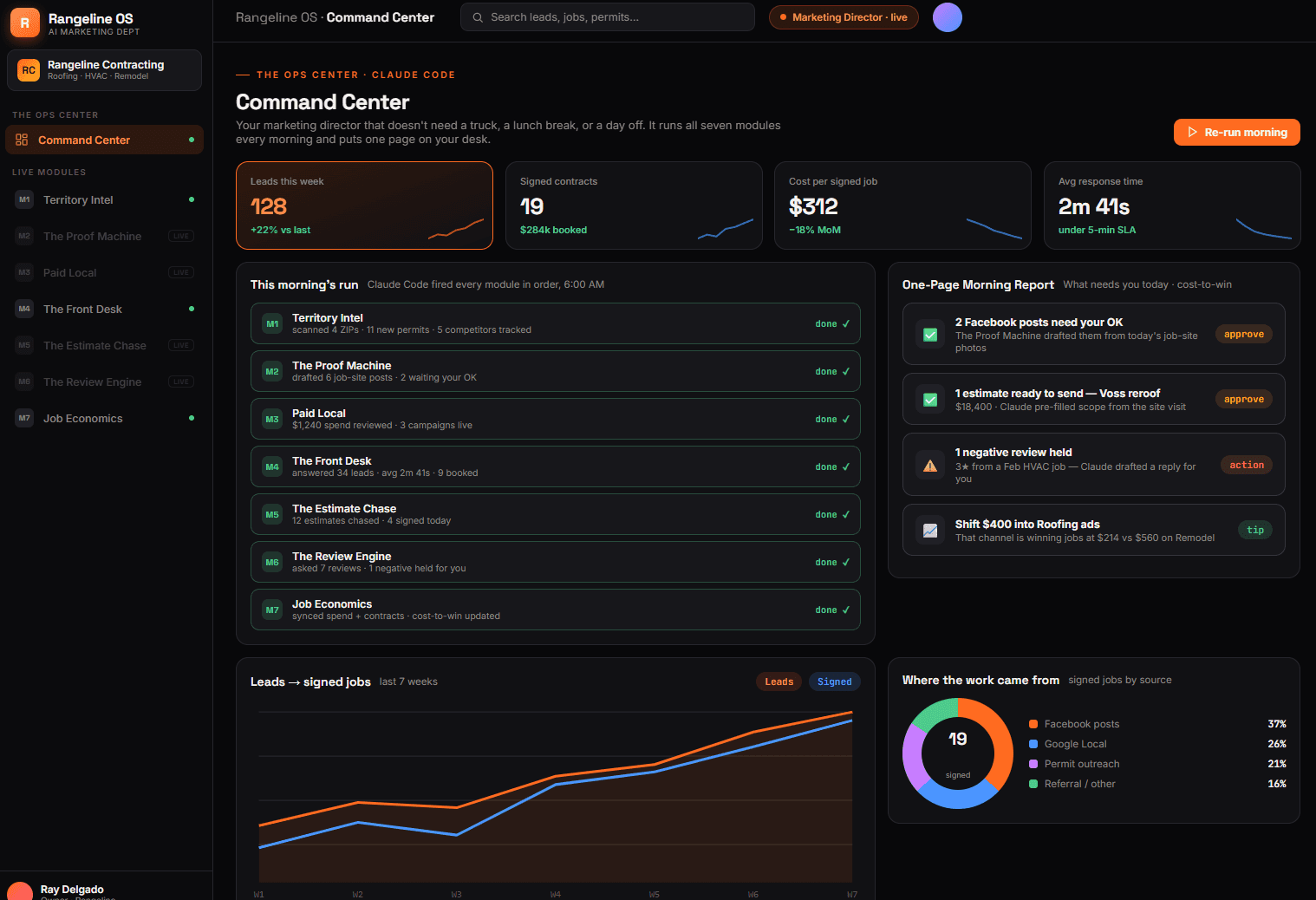
Claude reads the local market the exact same way an experienced estimator reads a job site.
- Market Scanning: It continuously scans targeted zip codes and monitors what competitors are doing and charging.
- Permit Tracking: By tracking new local permits and zoning data, it predicts upcoming work before the homeowner even starts calling for quotes. This allows the system to position the contractor ahead of the demand curve.
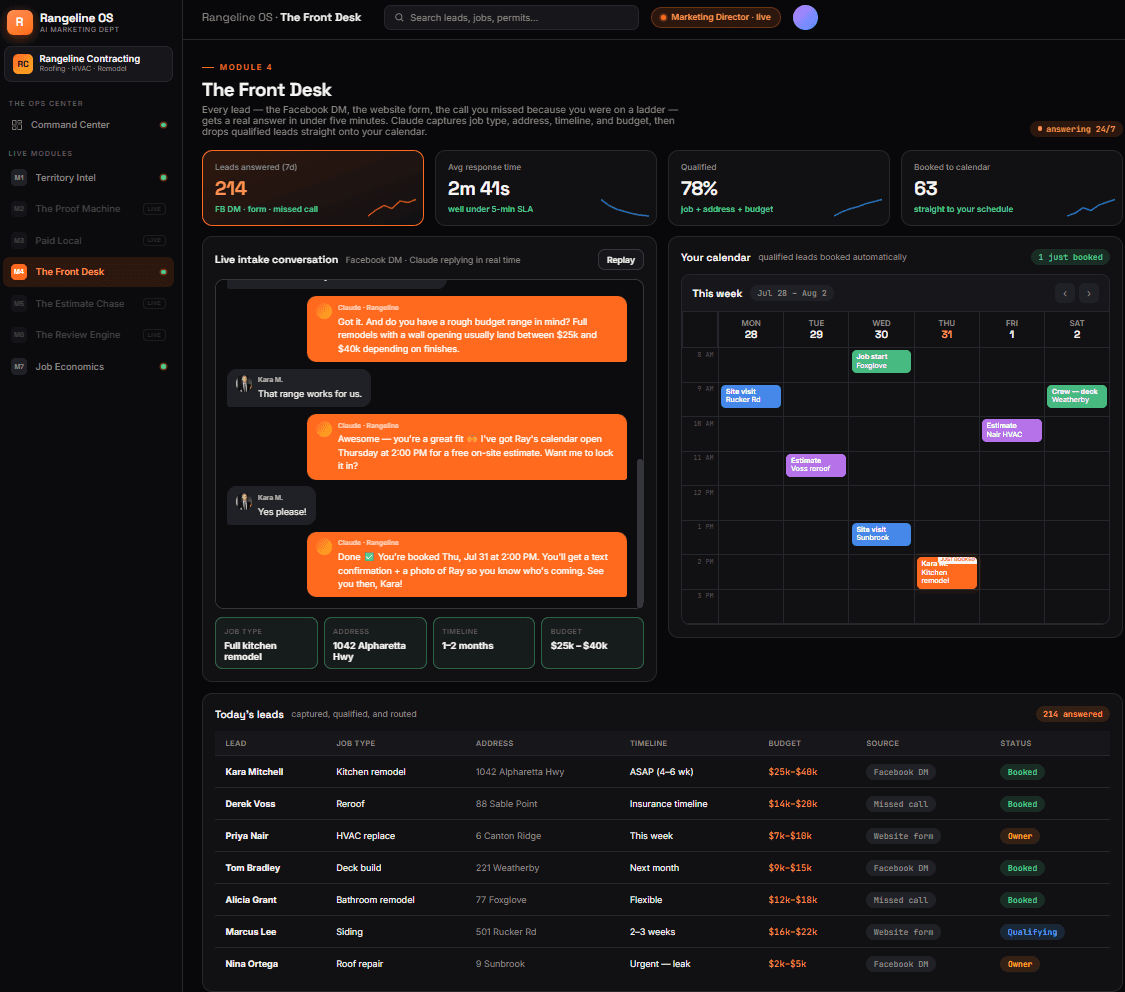
3. Module 4: The Front Desk (The Intake Engine)
Speed to lead is the single most critical metric in home services. This module ensures no opportunity is lost to a voicemail.
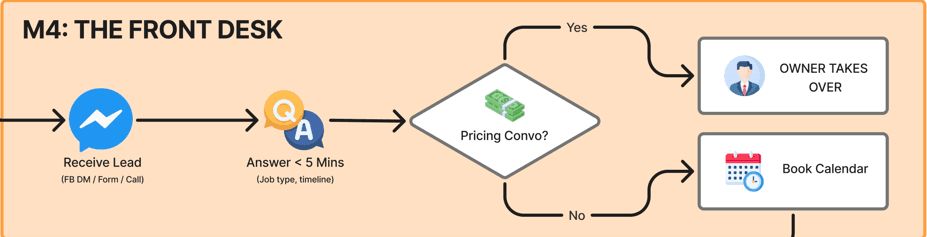
- Instant Qualification: Every inbound lead—whether it is a Facebook DM, a website form, or a missed call—receives a structured, human-like response in under five minutes.
- Smart Routing: The agent collects the vital details: job type, address, timeline, and budget range. If the lead requires a complex pricing conversation, it routes directly to the owner. If it is a standard qualified lead, the agent books the consultation straight onto the calendar.
4. Module 7: Job Economics (The Capital Allocator)
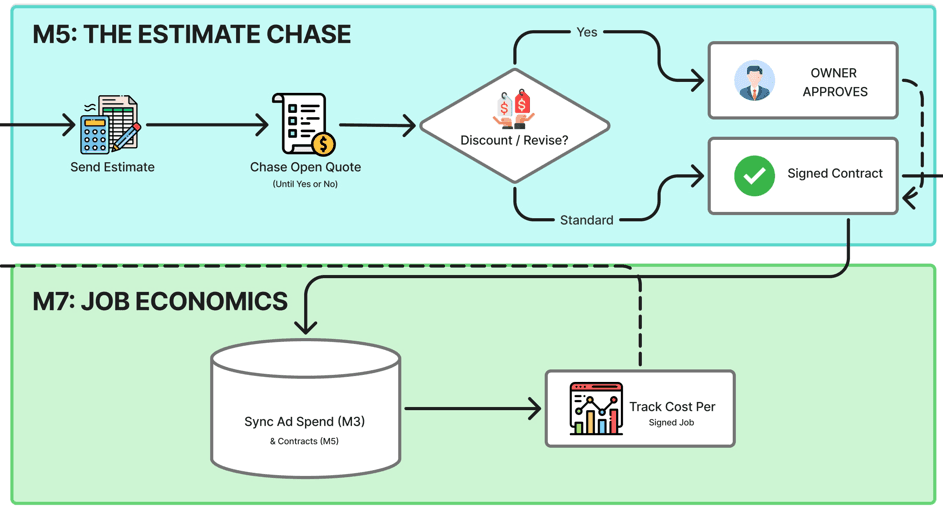
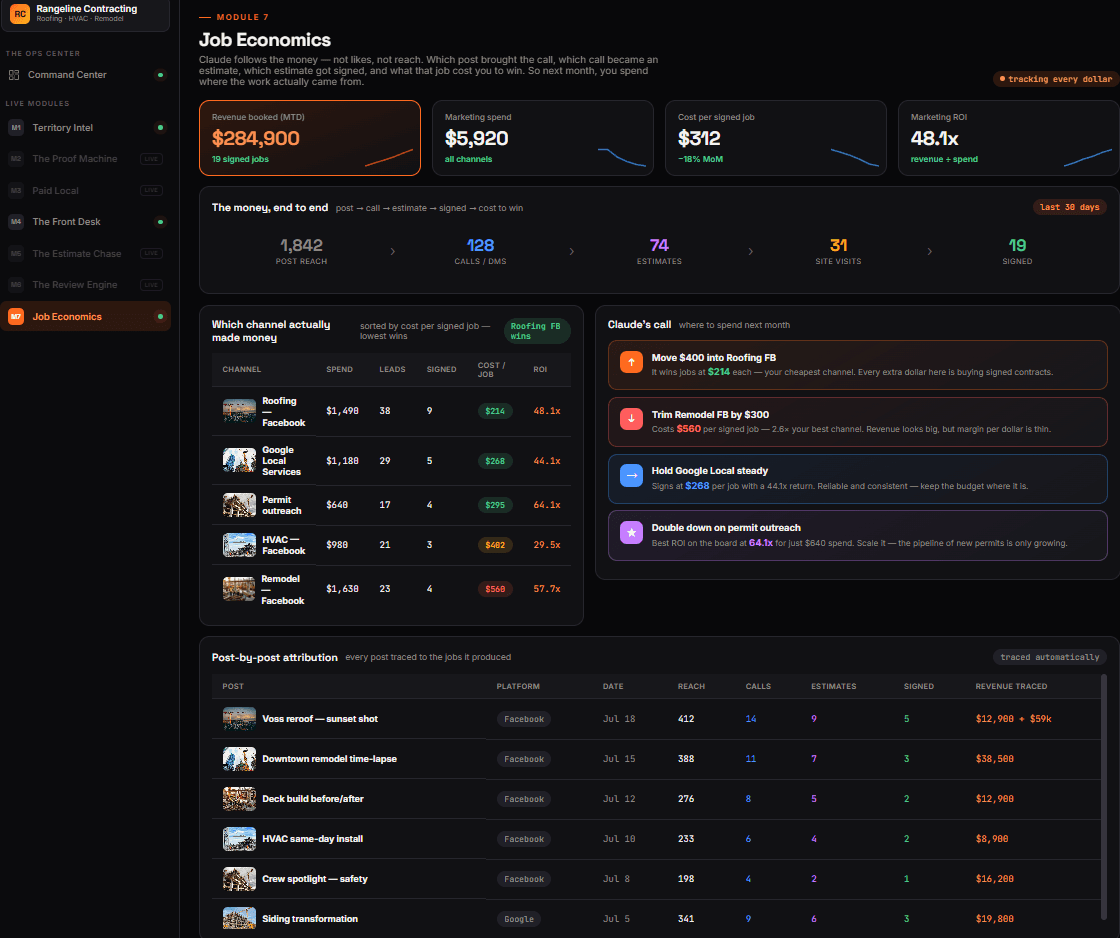
Marketing without strict ROI tracking is a liability. This module follows the money, completely ignoring vanity metrics like reach or impressions.
- Financial Pipeline Tracking: It syncs ad spend data (from M3) with signed contracts (from M5) to track the exact lifecycle: Ad Spend → Inbound Call → Issued Estimate → Signed Contract.
- Cost Per Signed Job: By calculating exactly what it cost to win a specific job, it provides the intelligence needed to allocate next month's budget only to the channels that actually generated revenue.
Conclusion
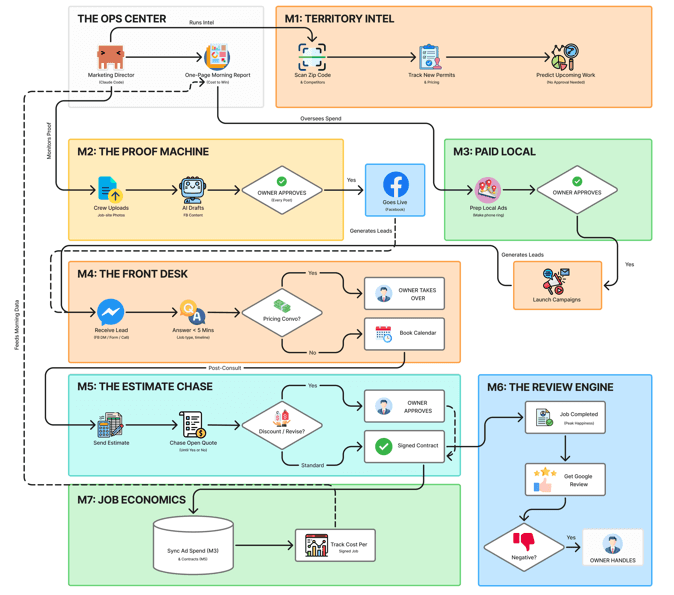
A contractor's business is built in the field, but it is scaled in the back office. By replacing manual intake and scattered data with a unified, 7-module AI architecture, home service businesses can stop losing leads to competitors and start operating with total financial clarity.